
The Rise of Virtual Reality Classrooms in Education
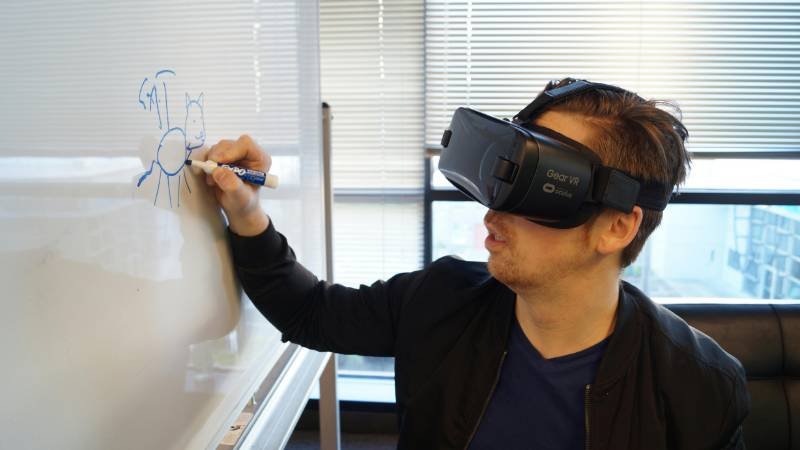
Virtual Reality (VR) is rapidly transforming the education sector by creating immersive learning environments that extend beyond the limitations of traditional classrooms. By enabling students to experience historical events, scientific phenomena, and complex concepts firsthand, VR classrooms significantly enhance engagement, understanding, and retention. VR not only makes learning interactive and fun but also prepares students for a future where digital literacy and experiential learning are essential skills.
How VR is Shaping Modern EducationVR technology allows students to enter three-dimensional learning environments where they can interact with objects, conduct experiments, and collaborate with peers in real-time. Unlike traditional methods, VR classrooms offer experiential learning, making abstract concepts tangible and easier to grasp. Virtual environments can be customized to accommodate different learning styles, whether visual, auditory, or kinesthetic, improving educational outcomes for all students.
** Benefits of VR Classrooms
- Provides immersive and interactive learning experiences that make abstract concepts concrete - Enhances engagement and motivation among students, reducing classroom distractions - Facilitates practical learning in subjects like science, engineering, medicine, and arts - Encourages collaboration and teamwork through shared VR simulations - Makes education more accessible for remote or differently-abled learners - Supports experiential learning that improves knowledge retention and critical thinking
What Happens When Your AI Agent Gets Access to Your Email, Files and Apps? The New Security Problem Businesses Need to Understand
ChatGPT vs. Claude for Work: Which AI Is Actually Better for U.S. Businesses in 2026?
How Much Are U.S. Companies Really Spending on AI in 2026? The Numbers Behind the AI Spending Boom
Can AI Agents Actually Replace Business Software in 2026? What the “SaaSpocalypse” Debate Gets Right—and Wrong
STEM subjects benefit immensely from VR. Students can perform virtual chemistry experiments without the hazards of a real lab, explore human anatomy in three dimensions, and simulate physics experiments. Teachers can demonstrate complex processes visually, allowing students to manipulate variables and see real-time results. VR also inspires innovation and problem-solving skills by giving students the freedom to experiment in a risk-free environment.
[https://edtechmagazine.com/k12/article/2023/04/virtual-reality-classrooms-transform-learning](VR Classrooms Transforming Learning)
💡 Discover More from Cloud & SaaS

AI & Automation
AI Agents vs. AI Assistants: What’s the Difference—and Which One Should Your Business Use in 2026?
AI & Automation
The Future of Generative AI in Creative Industries
AI & Automation
Machine Learning in Healthcare: Transforming Diagnosis and Treatment

AI & Automation
How Artificial Intelligence Is Redefining Workplace Productivity
History and geography lessons are significantly enhanced by VR. Students can virtually visit ancient civilizations, witness historical events, or explore remote geographical landscapes. This immersion promotes better understanding, empathy, and engagement. Virtual field trips provide an experience close to real-life exploration, making learning more memorable and interactive.
VR in Special EducationVR classrooms provide inclusive learning opportunities for students with disabilities. Customized VR experiences allow learners to engage at their own pace, practice social and cognitive skills, and interact with content in a comfortable environment. For students with sensory or mobility challenges, VR offers a safe, engaging, and highly personalized learning experience.
Challenges of Implementing VR in Education- High costs of VR hardware, software, and content development - Need for comprehensive teacher training and ongoing technical support - Risk of motion sickness, eye strain, or discomfort during extended VR sessions - Limited access for students without compatible devices or high-speed internet - Ensuring curriculum integration aligns with national educational standards - Addressing privacy concerns and safe handling of student data
[https://www.forbes.com/sites/forbestechcouncil/2023/05/10/future-of-vr-in-education](The Future of VR in Education)
Overcoming ChallengesInstitutions can adopt cost-effective VR solutions, provide teacher training, and integrate VR modules gradually into existing curricula. Cloud-based VR platforms can help overcome device limitations, and standardized content can ensure alignment with educational standards. Schools can also implement VR health guidelines to minimize discomfort and ensure a safe learning environment.
The Future of VR ClassroomsThe future of VR in education is promising and will likely include AI-powered adaptive learning, global collaborative classrooms, virtual field trips, and immersive assessment methods. VR will transform traditional pedagogy into an experiential, interactive, and highly engaging system. Students will be able to learn at their own pace, teachers will gain insights through analytics, and global collaborations will foster cross-cultural understanding.
Case Studies of VR in Education- Stanford University uses VR to conduct immersive surgical training for medical students, improving both skill acquisition and confidence. - Google Expeditions allows schools to take students on virtual tours of museums, outer space, and world landmarks, enhancing geography and history education. - Labster provides virtual labs for STEM students, enabling cost-effective and safe practical experimentation. - Oculus Education programs help schools integrate VR technology to create interactive STEM, language, and art experiences.
[https://blockone.us/Exploring-the-Future-of-VR-Gaming-What-s-Next-for-Immersive-Experiences-](Exploring the Future of VR Gaming: What’s Next for Immersive Experiences?)
 Conclusion
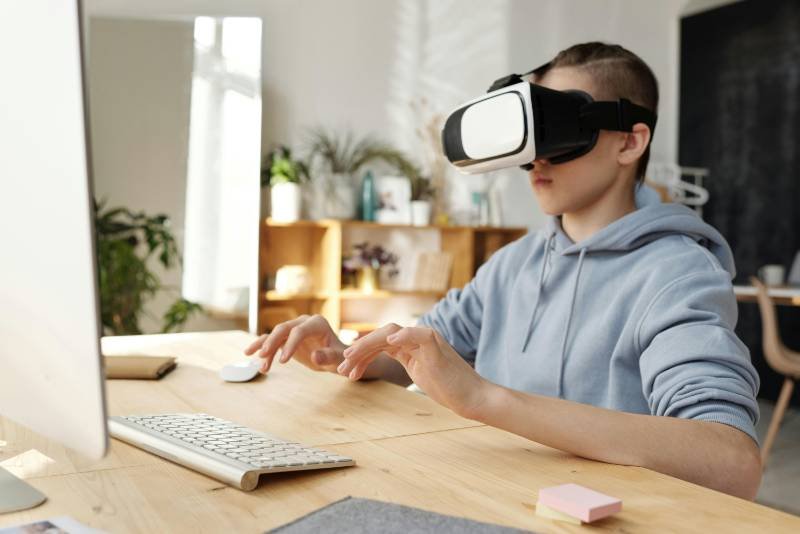
Virtual Reality is revolutionizing education by providing immersive, interactive, and inclusive learning environments. VR classrooms enhance student engagement, facilitate practical learning, and prepare learners for a technology-driven future. As VR technology becomes more affordable and accessible, it is set to play a critical role in shaping the next generation of learners, making education more dynamic, personalized, and globally connected.
Stay in the Loop


You May Also Like
 IOT & Blockchain 5 min read| 04 Aug 2026
Building the Trust Machine: How Blockchain is Revolutionizing Trust Systems
Blockchain technology is transforming trust systems by providing secure, transparent, and decentralized solutions.
 Cloud & SaaS 6 min read| 12 Aug 2026
Reality Remix: How AR and VR are Blurring the Lines Between Digital and Physical Worlds
Welcome to the era of Reality Remix, where Augmented Reality (AR) and Virtual Reality (VR) are reshaping our perception of the world. In this article, we'll explore how AR and VR technologies are blurring the lines between the digital and physical realms, creating immersive experiences that redefine reality as we know it.
 AI & Automation 7 min read| 16 Jun 2026
AI in Robotics: Enhancing Automation and Human Interaction
Artificial Intelligence (AI) has revolutionized the field of robotics, ushering in an era of unprecedented automation and interaction between machines and humans. This synergy between AI and robotics holds immense potential to transform various industries, from manufacturing and healthcare to agriculture and entertainment. In this article, we explore how AI is enhancing automation and human interaction in robotics.
 IOT & Blockchain 7 min read| 02 Sep 2026
Blockchain in Gaming: How Decentralized Networks Are Changing the Industry
Blockchain technology is making significant waves in the gaming industry, offering new opportunities for developers, players, and investors alike. By leveraging decentralized networks, blockchain is transforming various aspects of gaming, from in-game economies and asset ownership to game development and community engagement.