
How Blockchain Is Reshaping Global Supply Chains
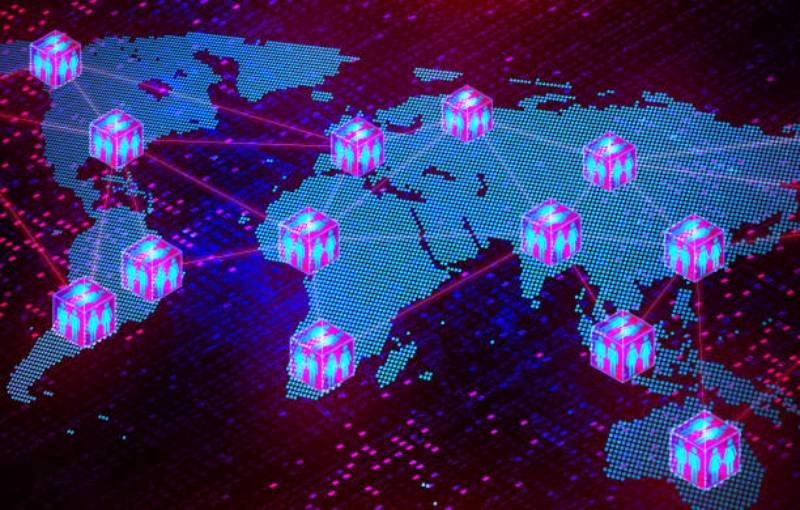
Blockchain technology is revolutionizing global supply chains by providing transparency, traceability, and security. In an era of increasing complexity, where goods traverse multiple countries and stakeholders, blockchain offers a decentralized and immutable ledger that ensures accountability and trust across the entire supply chain.
The Challenges in Traditional Supply ChainsGlobal supply chains often suffer from inefficiencies, lack of transparency, counterfeiting, and delayed information flow. Businesses struggle with tracking products, verifying authenticity, and ensuring compliance with regulations. These challenges increase operational costs, reduce consumer trust, and limit the efficiency of international trade.
What Happens When Your AI Agent Gets Access to Your Email, Files and Apps? The New Security Problem Businesses Need to Understand
ChatGPT vs. Claude for Work: Which AI Is Actually Better for U.S. Businesses in 2026?
How Much Are U.S. Companies Really Spending on AI in 2026? The Numbers Behind the AI Spending Boom
Can AI Agents Actually Replace Business Software in 2026? What the “SaaSpocalypse” Debate Gets Right—and Wrong
Blockchain introduces a decentralized ledger where each transaction is recorded and verified by network participants. Key benefits include: - **Transparency: Every participant can access the same information, reducing errors and miscommunication - **Traceability: Products can be tracked from origin to delivery, ensuring authenticity and reducing fraud - **Security: Data recorded on the blockchain is immutable and tamper-proof, enhancing trust among stakeholders - **Efficiency: Automated smart contracts streamline processes, reducing administrative overhead and delays
[https://www.supplychaindigital.com/technology/blockchain-transforming-global-supply-chains](How Blockchain is Transforming Supply Chains)
💡 Discover More from IOT & Blockchain

AI & Automation
AI Agents vs. AI Assistants: What’s the Difference—and Which One Should Your Business Use in 2026?

AI & Automation
The Future of Generative AI in Creative Industries

AI & Automation
Machine Learning in Healthcare: Transforming Diagnosis and Treatment

AI & Automation
How Artificial Intelligence Is Redefining Workplace Productivity
Several industries are already leveraging blockchain to enhance supply chain management: - **Food Industry: Companies like Walmart and Nestle use blockchain to trace the journey of food products, ensuring safety and freshness - **Pharmaceuticals: Blockchain helps verify the authenticity of medicines and prevents counterfeiting - **Luxury Goods: Brands like LVMH and De Beers use blockchain to track product provenance, ensuring authenticity and sustainability - **Logistics:** Shipping companies employ blockchain to monitor cargo movement, automate documentation, and improve cross-border trade efficiency
[https://www.forbes.com/sites/forbestechcouncil/2023/07/01/blockchain-supply-chain](The Future of Blockchain in Supply Chain Management)
Benefits for BusinessesImplementing blockchain in supply chains offers numerous advantages: - Improved transparency and accountability - Reduced risk of fraud and counterfeit products - Faster and more efficient transactions through smart contracts - Better regulatory compliance and reporting - Enhanced customer trust through verifiable product information
Challenges of Implementing Blockchain in Supply ChainsDespite its benefits, blockchain adoption comes with challenges: - High initial costs of deployment and integration - Need for stakeholder collaboration across the supply chain - Regulatory and legal uncertainties in different countries - Scalability issues and energy consumption concerns - Requirement for technical expertise to maintain and operate blockchain systems
The Future of Blockchain in Global Supply ChainsBlockchain is poised to become a standard in global supply chain management. Integration with IoT, AI, and big data will further enhance traceability, predictive analytics, and operational efficiency. As more companies adopt blockchain and regulatory frameworks evolve, supply chains will become more transparent, secure, and resilient. Consumers will also benefit from greater confidence in product authenticity and ethical sourcing practices.
 Case Studies of Blockchain Success
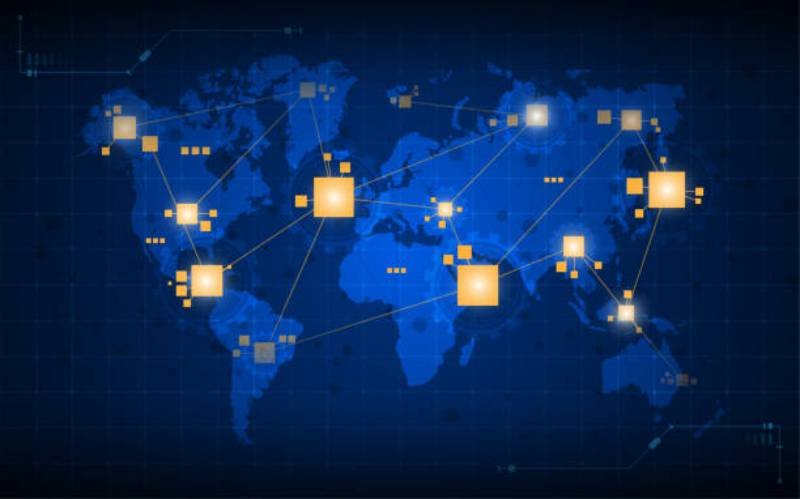
- Walmart uses blockchain to track leafy greens and other perishables, reducing the time needed to trace product origins from days to seconds. - De Beers tracks diamonds from mine to retailer using blockchain, ensuring ethical sourcing and authenticity. - Maersk collaborates with IBM to implement TradeLens, a blockchain-based shipping platform that increases transparency and efficiency in global logistics.
[https://blockone.us/How-Blockchain-is-Powering-the-New-Wave-of-Smart-Contracts](How Blockchain is Powering the New Wave of Smart Contracts )
ConclusionBlockchain is reshaping global supply chains by enhancing transparency, security, and efficiency. While challenges remain, the benefits for businesses and consumers are substantial. As blockchain technology continues to evolve, it will drive the next generation of smart, secure, and transparent supply chains, fundamentally transforming how goods move across the globe.
Stay in the Loop



You May Also Like
 AI & Automation 7 min read| 01 Sep 2026
The Impact of Deep Learning on Natural Language Processing (NLP)
Deep learning has revolutionized the field of Natural Language Processing (NLP), leading to remarkable advancements in how machines understand and generate human language. By leveraging complex neural networks and large datasets, deep learning algorithms have transformed NLP applications, enhancing their accuracy and capabilities.
 IOT & Blockchain 4 min read| 15 Aug 2026
From Fans to Funders: Blockchain Revolutionizes Fan Engagement
Blockchain technology transforms fan engagement by offering new ways for fans to support, interact with, and invest in their favorite artists and creators.
 AI & Automation 2 min read| 27 Jun 2026
AI in Agriculture: Improving Crop Yield and Sustainability
Artificial intelligence (AI) is revolutionizing agriculture by providing innovative solutions to improve crop yield, optimize resource management, and promote sustainability. From precision farming to crop monitoring, AI technologies offer farmers valuable insights and tools to enhance productivity and efficiency in agricultural practices.
 AI & Automation 3 min read| 20 Aug 2026
Machine Learning in Cybersecurity: Protecting Data in a Digital World
Machine learning is becoming a crucial tool in the field of cybersecurity, enhancing the ability to detect, prevent, and respond to cyber threats. As cyberattacks become more sophisticated, machine learning algorithms are playing a pivotal role in safeguarding data and maintaining digital security.