
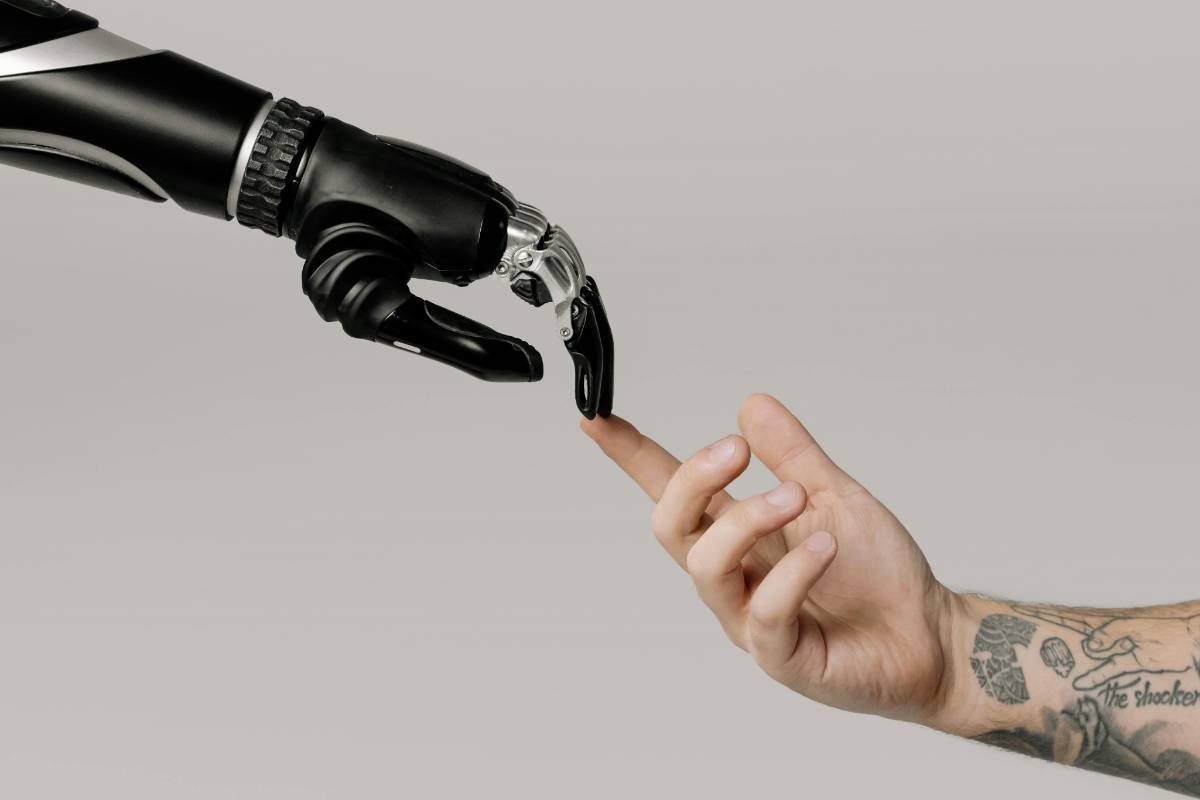
The Impact of AI on Employment: Job Displacement vs. Job Creation
Artificial Intelligence (AI) is reshaping the labor market, raising concerns about job displacement while also creating new opportunities. This article examines the dual impact of AI on employment, discussing trends, challenges, and potential strategies for navigating the future of work.
Job Displacement
AI and automation technologies have the potential to automate routine tasks and jobs, leading to job displacement in certain sectors. Industries such as manufacturing, retail, and customer service are seeing changes as AI-powered systems take over repetitive tasks.
For instance, automated assembly lines and robotic process automation (RPA) in customer service centers can replace human workers in performing routine tasks.
Job Creation
Simultaneously, AI is driving job creation by opening up new roles and opportunities in emerging fields. AI specialists, data scientists, and roles focusing on AI ethics and governance are in high demand as organizations integrate AI into their operations.
Additionally, AI-powered technologies are creating new industries and business models, fostering innovation and economic growth.
Mitigating Job Displacement
To address job displacement, stakeholders can consider: Upskilling and Reskilling: Investing in training programs to equip workers with skills needed for AI-related roles. Labor Market Policies: Developing policies that support workers affected by automation, such as job transition programs and income support.
Future Scenarios
The future of AI and employment is dynamic and depends on various factors, including technological advancements, policy decisions, and societal adaptation. Potential scenarios include: Coexistence: Humans and AI collaborate, with AI handling routine tasks while humans focus on creativity and complex problem-solving. Job Polarization: AI leads to a division of jobs into high-skill, high-wage roles and low-skill, low-wage roles.
Conclusion
In conclusion, AI's impact on employment is multifaceted, with both challenges and opportunities. By proactively addressing displacement through education, policy, and innovative approaches, societies can harness the benefits of AI while mitigating its potential drawbacks on the labor market.
Stay in the Loop


You May Also Like
 AI & Automation 3 min read| 22 Aug 2026
The Ethical Dilemmas of Artificial Intelligence: What We Need to Know
Artificial Intelligence (AI) presents numerous ethical dilemmas that need careful consideration as technology advances. From privacy concerns to bias and accountability, the ethical implications of AI are complex and multifaceted.
 AI & Automation 7 min read| 06 Sep 2026
The Challenges of Bias in AI: Can Machine Learning Ever Be Truly Fair?
The issue of bias in Artificial Intelligence (AI) and machine learning is a critical concern that affects the fairness and reliability of these technologies. As AI systems become increasingly integrated into various aspects of our lives, from hiring practices to law enforcement, it is essential to address the challenges of bias to ensure that machine learning models operate equitably and without discrimination.
 AI & Automation 6 min read| 08 Sep 2026
Machine Learning in Healthcare: Transforming Diagnosis and Treatment
*** Introduction
 IOT & Blockchain 5 min read| 15 Jun 2026
The Immutable Nature of Blockchain: Security and Data Integrity
Blockchain technology, first introduced by Satoshi Nakamoto in 2008 as the underlying technology behind Bitcoin, has revolutionized the way we think about security and data integrity. At its core, blockchain is a decentralized and distributed ledger that records transactions across a network of computers in a way that makes them immutable and tamper-proof.