

Your Voice Can Be Cloned by AI—So How Can You Tell If a “Family Emergency” Call Is Real?
AI voice cloning has made family emergency scams harder to recognize because a caller can sound like someone you love. The safest response is not to “listen harder,” but to verify independently. Hang up, call the person’s number, contact another relative, use a family code word, and never send money under pressure. Caller ID alone is never proof of identity.
When a Familiar Voice Is No Longer ProofImagine getting a call from your daughter on a Tuesday afternoon.
She sounds frightened. She says she has been in an accident. Maybe she is in a hospital. Maybe she says someone has been arrested. Or perhaps a stranger gets on the line and claims your daughter is being held somewhere and needs money immediately.
You recognize the voice instantly.
The voice sounds right. The emotion sounds right. The urgency feels real.
That is precisely why this scam can work.
Artificial intelligence can now generate highly convincing copies of human voices from relatively small amounts of recorded speech. The Federal Trade Commission has specifically warned that scammers can use short audio clips posted online to clone a loved one’s voice and then make an emergency call designed to pressure someone into sending money.
The important lesson for Americans is not that every strange phone call is fake. It is that a familiar voice is no longer sufficient evidence of identity.
That distinction matters because the most effective defense is not becoming an expert at detecting synthetic speech. It is building a verification habit that still works when the technology is convincing.
Why AI Voice Cloning Changes the Classic Family Emergency ScamThe family emergency scam is not new. For years, criminals have pretended to be grandchildren, children, friends, lawyers, police officers, or doctors. The story usually involves a crisis and an urgent request for money.
Common versions involve claims that a loved one has been arrested, injured, stranded, or otherwise needs immediate assistance. Scammers often add secrecy: “Don’t tell Mom,” “Don’t call anyone,” or “I only have a few minutes.”
AI voice cloning adds another layer of credibility.
Previously, a scammer might have needed to imitate a person’s speech manually or rely on a generic script. Now, a criminal can potentially use publicly available recordings to produce synthetic speech that resembles the target closely enough to fool someone who knows that person well.
The FBI has described this technique in its warnings about generative AI-enabled fraud, noting that criminals can use AI-generated audio to impersonate personal relations and create crisis scenarios in which the victim is asked for immediate financial assistance.
And the problem is not merely theoretical.
The FBI’s 2025 Internet Crime Report recorded 22,364 complaints containing AI-related information and adjusted losses of more than $893 million. Within its discussion of AI-enabled fraud, the FBI specifically identified “distress” or grandparent scams in which voice cloning is used to imitate a loved one. Victims reported more than $5 million in losses to distress scams in 2025.
Those figures should not be interpreted as the total amount lost to AI voice scams. The FBI’s AI-related category includes multiple forms of fraud, while the distress-scam figure represents reported losses. But they demonstrate that voice cloning is already part of the U.S. fraud landscape.
What Happens When Your AI Agent Gets Access to Your Email, Files and Apps? The New Security Problem Businesses Need to Understand
ChatGPT vs. Claude for Work: Which AI Is Actually Better for U.S. Businesses in 2026?
How Much Are U.S. Companies Really Spending on AI in 2026? The Numbers Behind the AI Spending Boom
Can AI Agents Actually Replace Business Software in 2026? What the “SaaSpocalypse” Debate Gets Right—and Wrong
Sometimes you may notice something unusual.
The voice might have an odd pause. The emotional tone might feel slightly unnatural. Certain words may be pronounced differently. The pacing could seem unusual. Background sounds might not behave as expected.
But relying on those clues is increasingly risky.
A 2025 study published in Scientific Reports by researchers including UC Berkeley digital-forensics expert Hany Farid tested people’s ability to distinguish AI-generated voice clones from real voices. Participants perceived an AI-generated voice as having the same identity as the real speaker approximately 80% of the time. When directly asked whether a voice was real or AI-generated, participants correctly identified AI-generated voices only about 60.8% of the time.
That finding changes how consumers should think about the problem.
If trained or attentive listeners cannot reliably identify synthetic voices, expecting an ordinary parent or grandparent to recognize a sophisticated clone during a frightening emergency is unrealistic.
The researchers also found that longer, more conversational audio could improve people’s ability to judge authenticity. But that does not mean you should stay on a suspicious call and conduct your own voice-forensics investigation. Independent verification remains much stronger than trying to diagnose the audio itself.
In other words, don’t make “Does this sound like AI?” your primary security question.
Ask instead:
“How can I verify that this person is really who they claim to be?”
💡 Discover More from Cybersecurity

AI & Automation
AI Agents vs. AI Assistants: What’s the Difference—and Which One Should Your Business Use in 2026?

AI & Automation
The Future of Generative AI in Creative Industries

AI & Automation
Machine Learning in Healthcare: Transforming Diagnosis and Treatment

AI & Automation
How Artificial Intelligence Is Redefining Workplace Productivity
The strongest warning signs are usually behavioral rather than acoustic.
A convincing voice paired with a suspicious request should be treated differently from an ordinary conversation. The voice may be perfect, but the circumstances surrounding the call can still expose the scam.
Watch for these combinations:
• Extreme urgency: “You have to do this right now.”
• Pressure to keep the situation secret: “Don’t tell Dad.”
• A request for unusual payment: cryptocurrency, gift cards, wire transfers, cash couriers, or payment apps.
• A new phone number or messaging account: particularly when the caller says their normal phone is unavailable.
• A third-party authority figure: someone claiming to be a lawyer, police officer, doctor, bail agent, or hospital employee.
• A request to stay on the line: especially if the caller discourages you from contacting other relatives.
• A story designed to prevent verification: “My phone is dead,” “I’m not allowed to make calls,” or “They won’t let me leave.”
• A demand for personal information: Social Security numbers, account credentials, one-time codes, or banking information.
The FTC specifically warns that fake emergency scammers use urgency, secrecy and emotional pressure to prevent victims from stopping to verify the story.
That is an important distinction: urgency is not evidence of authenticity.
A genuine family member may be desperate. A genuine emergency may actually exist. But that does not mean the person making the call is the person they claim to be.
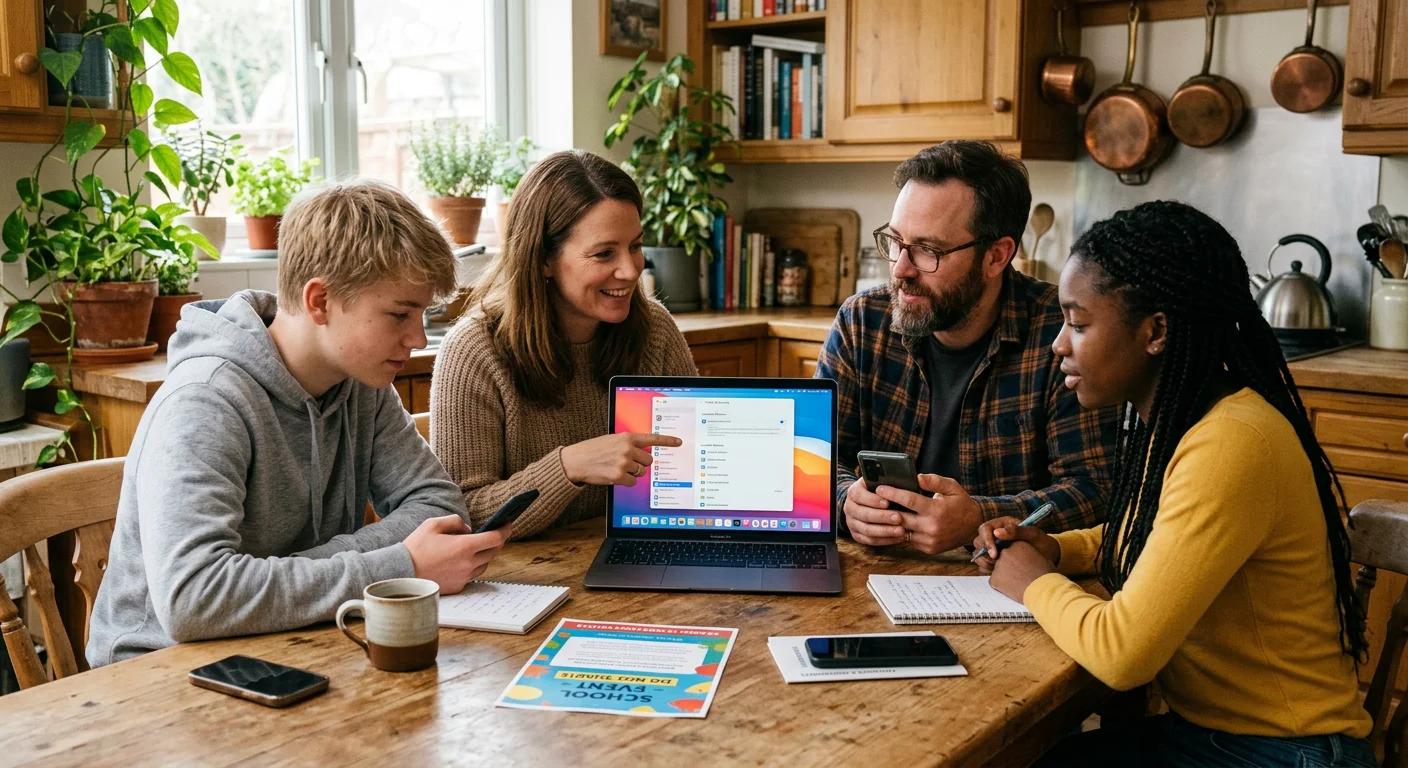 Why Caller ID Is Not Enough
Many people instinctively look at the phone screen and think, “That’s my son’s number.”
Unfortunately, that does not settle the question.
Caller ID information can be manipulated or spoofed. The FBI has repeatedly advised people to independently verify unexpected communications rather than trusting the displayed number, particularly when money or sensitive information is involved.
This creates an important rule for families:
Do not call the number that the caller gives you. Call the number you already have.
If your daughter says her phone was stolen, use the number stored in your contacts.
If your grandson says he is calling from a new number, contact his normal number anyway.
If the caller claims to be a police officer, hospital employee or attorney, independently locate the organization’s official telephone number rather than using the number provided during the emergency call.
Verification should happen through a channel the scammer does not control.
The Safest Response: Hang Up and VerifyThe most useful habit is surprisingly simple.
Stop the conversation.
You do not need to accuse the caller of being a scammer. You can simply say that you need to check something and will call back.
Then contact the supposed family member directly using a previously trusted number.
If they don’t answer, contact another family member, spouse, friend, coworker or someone who can reasonably confirm where they are.
The FBI’s guidance similarly recommends independently identifying a phone number for the person or organization and calling that number to verify authenticity.
This creates a major advantage: the scammer has to maintain the story across multiple independent channels.
A fake caller may successfully imitate your son’s voice.
It is much harder to simultaneously control your son’s actual phone, his spouse’s phone, his workplace and another family member’s knowledge of his location.
A practical verification sequence:
1. Do not send money during the initial call.
2. End the call politely.
3. Call the loved one using your existing contact information.
4. If they don’t answer, contact another trusted person who can verify their whereabouts.
5. If the story involves a hospital, police department or jail, independently contact the relevant institution.
6. Only consider financial assistance after the emergency has been independently confirmed.
The critical point is that verification should happen before payment, not afterward.
A 2026 California case illustrates why. Deborah Del Mastro told ABC News that a stranger claimed to have kidnapped her daughter and then put a voice on the phone that sounded like her daughter crying and struggling to breathe. Del Mastro wired $5,400 before calling her daughter directly and learning that she was safe at work.
Her story demonstrates the psychological weakness these scams exploit: the victim’s instinct to protect someone they love is working exactly as intended.
The problem is not a lack of intelligence.
The problem is that panic changes decision-making.
Should Families Create a Secret Code Word?Yes. A family verification phrase can be useful, especially for parents, grandparents and families with members who travel frequently.
The FBI has recommended creating a secret word or phrase that can be used to verify a family member’s identity.
The important part is how you create it.
Don’t choose something obvious such as a pet’s name, school mascot or favorite sports team. Those details may already appear on social media.
Instead, choose something that is difficult to guess and has no obvious connection to publicly available family information.
For example, a family might agree that an unexpected emergency caller must answer a question whose answer isn’t posted online.
The code word should not be treated as an infallible security system. A genuine person in distress might not remember it, and scammers may try to manipulate you into revealing it.
The better principle is:
The code word is one layer of verification, not the entire verification process.
You can also create a family rule that no one sends money based solely on an unexpected phone call.
That rule is often more valuable than a sophisticated security product because it changes the decision process before the crisis occurs.
What If the Caller Says They Can’t Talk Normally?This is one of the more difficult situations.
A scammer may say the supposed victim is injured, being watched, unable to speak freely, or surrounded by police. The voice may sound emotional enough that you hesitate to ask questions.
The temptation is to think, “I can’t hang up because something might really be wrong.”
But that is exactly when an independent check becomes more important.
You can tell the caller you are contacting someone else to arrange help.
If it is a genuine emergency, additional verification should not prevent you from contacting emergency services or another trusted person.
If the caller becomes angry specifically because you want to verify the story, treat that reaction as another warning sign.
A legitimate person may be frustrated by delays. A scammer has a much stronger incentive to prevent you from making another call.
What Questions Should You Ask a Suspicious Caller?Open-ended questions can sometimes expose inconsistencies.
Instead of asking, “Are you really Jake?” try questions that require the caller to provide information rather than simply confirm what you already said.
For example:
“Where are you right now?”
“Who is with you?”
“What hospital did they take you to?”
“What was the name of the person who spoke to you?”
“What did we do together last weekend?”
However, don’t assume that a correct answer proves authenticity.
Scammers may already know personal information about the family from social media, stolen accounts, data breaches or previous conversations.
And an AI system can potentially generate answers to questions in real time.
The purpose of questions is therefore to create additional information that can be evaluated—not to replace independent verification.
The Scientific Reports research found that conversational characteristics can influence detection performance, but the overall findings still showed that people were poorly equipped to reliably identify AI-generated voice clones.
 What About Asking the Caller to Say Something Only the Real Person Would Know?
This is better than relying entirely on voice recognition, but it has limitations.
A genuinely private fact may help distinguish the person. Yet families should avoid assuming that personal knowledge is automatically secret. Birthdays, pet names, relatives, schools, workplaces, vacation locations and favorite teams may all be discoverable online.
A stronger approach is to use a pre-agreed secret, rather than a fact that already exists.
For example, don’t ask:
“What was the name of our dog?”
Instead, establish beforehand that unexpected emergency calls require a specific phrase.
The difference is important.
One relies on information that may already be public.
The other relies on information deliberately shared only for authentication.
Don’t Let the Payment Method Decide for YouOne of the clearest warning signs is a demand for a payment method that is fast, difficult to reverse or difficult to trace.
The FTC says family emergency scammers commonly demand money through wire transfers, cryptocurrency, payment apps or gift cards.
A scammer may say:
“I need Apple gift cards.”
“Send Bitcoin.”
“Wire it to this account.”
“Bring cash to this person.”
“Use this payment app because the bank is closed.”
The exact method can change. The underlying strategy does not.
The criminal wants money to move before you have time to verify the story.
If a supposed family emergency requires immediate payment, the payment demand itself should trigger your verification procedure.
Can Social Media Make You More Vulnerable?It can.
Public videos, podcasts, interviews, livestreams and social media posts can provide useful voice samples for criminals. The FBI recommends considering limits on publicly available images and voice content and making social media accounts private where appropriate.
That does not mean Americans need to stop posting videos.
The practical goal is to reduce unnecessary exposure.
Consider whether every public video needs clear, extended speech. Review old posts that contain long recordings. Check privacy settings. Be cautious about accepting unknown followers or connections.
Pindrop, a company specializing in voice security, reported a substantial increase in deepfake activity in its analysis of more than 1.2 billion calls, including a 680% year-over-year increase in deepfake activity in its dataset during 2024. Such vendor data should not be treated as a measure of every consumer call, but it illustrates how quickly synthetic voice technology is becoming relevant to fraud defenses.
The goal is not digital isolation.
It is simply to recognize that your voice is now another form of personal information.
What Should You Do If You Already Sent Money?Move quickly.
Don’t spend hours trying to determine exactly how the scam worked before contacting the payment provider.
If you sent money through a bank, wire service, payment app, cryptocurrency platform or gift card, contact the provider immediately and explain that the transaction resulted from fraud.
Depending on the payment method and timing, the provider may have options for stopping, reversing or flagging the transaction. There is no guarantee that funds can be recovered, particularly after a fast transfer or cryptocurrency transaction, but delay generally does not improve your position.
Also preserve evidence.
Keep:
• The caller’s phone number and caller ID information
• Text messages and voicemail recordings
• Payment receipts
• Bank or payment-app transaction records
• Emails or messaging conversations
• Names used by the scammer
• Any cryptocurrency wallet addresses
• The approximate date and time of each interaction
Report the incident to the FTC and the FBI’s Internet Crime Complaint Center when appropriate. If there is a credible threat of immediate physical danger, contact local law enforcement or 911 rather than relying on instructions from the caller.
Why “I Know My Child’s Voice” Is No Longer a Security StrategyThis may be the hardest mental adjustment.
Parents and grandparents have spent decades believing that recognizing someone’s voice is a form of identity verification.
In ordinary life, it works remarkably well.
But modern AI attacks a different layer of human perception. It doesn’t necessarily need to fool you into thinking a stranger sounds vaguely similar to your child. It can create audio that is close enough to activate the recognition response you have built over years.
The Scientific Reports study is particularly useful here because its participants were not simply asked whether a voice sounded pleasant or realistic. Researchers tested whether people could correctly identify voice identity and distinguish AI-generated voices from real recordings. The results show why confidence can be misleading: people often perceived the AI voice as the same identity as the real speaker.
So the new rule should be:
Recognizing a voice can start a conversation. It should not authorize a financial transaction.
That principle is simple enough to teach to an entire family.
A Five-Minute Family Plan That Works Before the Scam HappensThe best time to create a response plan is when nobody is frightened.
Sit down with family members and agree on a few basic rules.
First, establish a private verification word or phrase.
Second, decide that unexpected emergency requests for money require independent confirmation.
Third, make sure everyone knows at least one alternative way to contact each other.
Fourth, identify a trusted relative, neighbor or friend who can help verify an emergency if the primary person doesn’t answer.
Finally, make sure older relatives know that hanging up on an apparent emergency call is acceptable.
A useful family policy might be:
“If anyone calls asking for money because of an emergency, we hang up, verify independently and then decide what to do.”
That sentence removes the need to invent a decision while under pressure.
AI does not have to create a perfect replica to make a scam effective.
It only has to create enough familiarity to trigger concern, urgency and action.
That is why the most useful response is not becoming obsessed with tiny changes in someone’s breathing, accent or speech rhythm. Those clues may sometimes help, but modern synthetic voices can be convincing enough to defeat casual listening.
Instead, build a process that works even when the voice is perfect.
Hang up.
Call back through a known number.
Contact another person.
Use a private family verification phrase.
Refuse unusual payment demands until the emergency is independently confirmed.
The goal is not to distrust your family. It is to make sure that the person claiming to be your family gets verified before your emotions authorize an irreversible decision.
In an age when a familiar voice can be manufactured, the safest form of trust is no longer recognition.
It is verification.
Stay in the Loop



You May Also Like
 IOT & Blockchain 6 min read| 04 Sep 2026
Understanding the Legal and Regulatory Landscape of Blockchain Technology
Blockchain technology has rapidly evolved, offering innovative solutions across various sectors such as finance, supply chain, and healthcare. As its adoption grows, understanding the legal and regulatory landscape surrounding blockchain becomes increasingly important. Navigating this complex environment involves addressing legal challenges, regulatory requirements, and compliance issues to ensure that blockchain implementations are both effective and lawful.
 AI & Automation 5 min read| 04 Aug 2026
Machine Learning in Supply Chain Management: Optimization and Efficiency
Machine Learning (ML) is revolutionizing supply chain management by optimizing operations, enhancing efficiency, and improving decision-making processes. This article explores the transformative impact of ML in supply chain management, from demand forecasting and inventory optimization to logistics planning and predictive maintenance.
 AI & Automation 5 min read| 03 Aug 2026
AI in Marketing: Targeted Advertising and Customer Insights
Artificial Intelligence (AI) is revolutionizing marketing strategies by enhancing targeted advertising, improving customer insights, and optimizing campaign performance. This article explores the transformative role of AI in marketing, from personalized recommendations and predictive analytics to automated content generation and customer relationship management (CRM).
 Cybersecurity 4 min read| 26 Jul 2026
Unveiling the Future: Exploring the Latest Breakthroughs in Tech and Science
Welcome to the forefront of innovation, where the latest breakthroughs in technology and science are shaping the future of humanity. From artificial intelligence and biotechnology to space exploration and quantum computing, cutting-edge discoveries and advancements are paving the way for a new era of possibilities. In this article, we'll delve into some of the most exciting developments in tech and science and explore their potential impact on our world.