
Why Are Americans Losing So Much Money to Imposter Scams? What Changed in 2026?
Americans reported losing $3.5 billion to imposter scams in 2025, nearly three times the amount reported in 2020. In 2026, scammers are combining AI-generated identities, spoofed websites, social media targeting, fake security alerts, and increasingly sophisticated payment tactics. The result is a scam environment where familiar names and convincing communications can no longer be treated as proof of authenticity.
Why Imposter Scams Have Become a Bigger Problem in 2026Imposter scams are not new. For decades, criminals have pretended to be government officials, bank employees, relatives, technology companies, delivery services, or other trusted organizations. What has changed is the speed, scale, personalization, and realism of the deception.
The latest Federal Trade Commission data show just how significant the problem has become. Consumers reported losing $3.5 billion to imposter scams in 2025, nearly three times the amount reported in 2020. The FTC received more than one million imposter-scam reports, making impersonation the most frequently reported fraud category for the ninth consecutive year.
Those figures represent reported losses, not the full economic damage. Many victims never report scams because they feel embarrassed, believe recovery is impossible, or do not realize that a particular interaction was fraudulent.
The bigger issue for Americans in 2026 is therefore not simply that scammers are calling more people. It is that scammers can now make a fraudulent interaction look increasingly similar to a legitimate one.
A convincing text can appear to come from a toll agency. A caller can claim to work for a bank and know enough information about the customer to sound credible. A fake government website can look professional. A scammer can even use AI-generated media to create additional credibility.
The traditional advice to "look for obvious warning signs" still matters, but Americans increasingly need a different mindset: verify the person or organization independently before taking any financial action.
What Is an Imposter Scam?An imposter scam occurs when someone falsely claims to be another person, company, government agency, financial institution, technical-support representative, family member, or other trusted entity to persuade a victim to provide money, information, account access, or some other valuable asset.
The impersonation itself is only one part of the scheme. The real objective is usually to create enough trust and urgency that the victim stops independently verifying the request.
That distinction matters.
A scammer may not need to convince you that every detail is real. They only need you to believe the next step is legitimate.
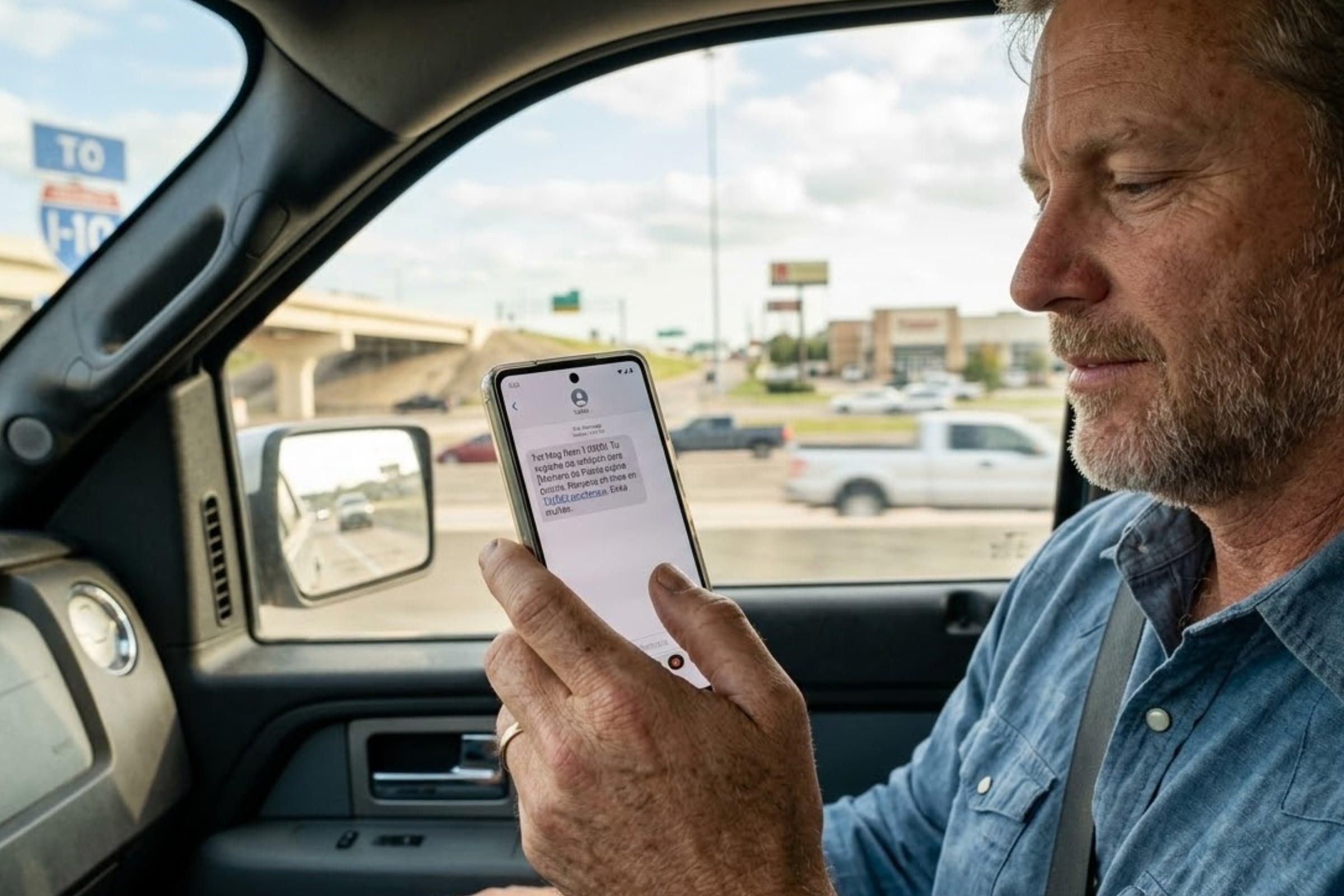
For example, imagine receiving a text saying:
"Your toll payment is overdue. Pay immediately to avoid additional fees or registration suspension."
The message may contain the name of a real toll system and a link that looks plausible. You may even have recently driven on a toll road.
The scam succeeds when you click before checking your actual toll account.
Government-impersonation toll scams are a useful example of how modern impersonation works: the scam does not have to invent an entirely fictional situation. It can take an ordinary event and attach a false emergency to it.
What Happens When Your AI Agent Gets Access to Your Email, Files and Apps? The New Security Problem Businesses Need to Understand
ChatGPT vs. Claude for Work: Which AI Is Actually Better for U.S. Businesses in 2026?
How Much Are U.S. Companies Really Spending on AI in 2026? The Numbers Behind the AI Spending Boom
Can AI Agents Actually Replace Business Software in 2026? What the “SaaSpocalypse” Debate Gets Right—and Wrong
The scale of the problem becomes clearer when the recent FTC data are placed side by side.
In 2024, consumers reported approximately $2.95 billion in losses from imposter scams. In 2025, reported losses climbed to $3.5 billion. The FTC says that 2025 losses were nearly three times the amount reported in 2020.
The broader fraud environment has also expanded. The FTC reported approximately $15.9 billion in consumer-reported fraud losses in 2025, compared with more than $12 billion in 2024. More than one million reports concerned imposter scams.
Government and business impersonation are particularly important because they exploit institutions Americans already recognize.
In 2025, consumers reported losing nearly $1 billion to business impersonators, while reported losses to government impersonators reached about $920 million, compared with $789 million in 2024.
There is another important trend: social media is becoming a major starting point for fraud.
The FTC found that nearly 30% of people who reported losing money to a scam in 2025 said the scam began on social media. Reported losses originating from social media reached $2.1 billion, roughly eight times the 2020 figure.
That creates a powerful combination: scammers can discover information about potential victims, target them with advertisements or fake profiles, and then transition the conversation to private messages, phone calls, or payment platforms.
💡 Discover More from Cybersecurity

AI & Automation
AI Agents vs. AI Assistants: What’s the Difference—and Which One Should Your Business Use in 2026?

AI & Automation
The Future of Generative AI in Creative Industries

AI & Automation
Machine Learning in Healthcare: Transforming Diagnosis and Treatment

AI & Automation
How Artificial Intelligence Is Redefining Workplace Productivity
Artificial intelligence did not create imposter scams, but it has lowered the cost of making fraudulent identities and communications appear credible.
Scammers can use AI tools to produce polished written messages, create convincing fake customer-service conversations, generate images, construct misleading websites, and potentially imitate voices or video.
The FBI warned in July 2026 that criminals impersonating the FBI's Internet Crime Complaint Center were using tactics that included AI-generated videos and spoofed websites designed to create a false sense of safety.
That changes one of the assumptions people traditionally make about scams: "It looks professional, so it must be legitimate."
That assumption is no longer reliable.
A professional-looking email proves very little. A familiar logo proves very little. Even a realistic-looking video or convincing voice should not independently establish identity.
The safer approach is to authenticate the organization through a channel you locate yourself.
2. Scammers Are Combining Multiple ImpersonationsOne of the most effective developments is the use of multiple identities in a single fraud.
Consider a hypothetical sequence:
A victim receives a text claiming to be from a bank's fraud department.
The victim calls the number in the message.
A person claiming to be a bank employee says the account is being investigated.
The victim is then transferred to someone claiming to be from the FBI.
The second person confirms the story and instructs the victim to move money to a "secure government account."
None of these people are real representatives.
But each identity reinforces the previous one.
The FBI has warned about related schemes in which criminals impersonate bank employees, FBI agents, and Department of Justice personnel. In one current variant, the scam is deliberately structured in stages rather than relying on one fraudulent interaction.
This matters because people naturally use social proof when making decisions. If two supposedly independent professionals tell you the same thing, the situation can feel confirmed.
In reality, the "second expert" may simply be another member of the same scam operation.
 3. Social Media Has Become a Research Tool for Scammers
Americans often think of social media scams as fake giveaways or suspicious messages from strangers. The modern threat is broader.
Public posts can reveal information about where someone works, where they travel, the names of relatives, their interests and hobbies, recent purchases, their approximate financial lifestyle, major life events, businesses they use, and professional relationships.
The FTC says scammers can exploit information people post, compromise accounts, create fake profiles, or purchase advertisements targeted by age, interests, and shopping behavior.
That information can then be used to create a more believable impersonation.
Suppose someone posts that they recently bought a new car. A few weeks later, they receive a message that appears to come from a dealership regarding a warranty problem.
The scammer did not necessarily guess the target's interest.
They may have learned it from the target's own online activity.
This is why privacy settings alone are not a complete defense. Americans should also think about what information a stranger could assemble from several public posts.
Why Do Smart, Careful People Still Fall for These Scams?One of the most damaging misconceptions about fraud is that victims are simply careless.
That is not how sophisticated social engineering works.
Imposter scams are designed around predictable human reactions: fear, urgency, authority, uncertainty, embarrassment, and the desire to fix a problem quickly.
A fake bank employee may tell you your account is being attacked.
A fake police officer may claim there is a warrant.
A fake government representative may threaten penalties.
A fake family member may say they are in trouble.
A fake technology specialist may claim that hackers have accessed your computer.
The victim is not making a decision under normal circumstances. They are making a decision under manufactured pressure.
The scammer's objective is to prevent the victim from entering a slower, more rational verification process.
That is why one of the most useful anti-scam rules is remarkably simple: If someone creates an emergency and tells you exactly how to solve it, stop and verify the emergency independently.
The Payment Method Is Often the Final TrapImposter scams become especially dangerous when the criminal moves the victim toward a payment method that is difficult to reverse.
The FTC has repeatedly warned about scams involving bank transfers, cryptocurrency, gift cards, and other payment methods. In 2024, consumers reported losing more money through bank transfers and cryptocurrency in scams than through all other payment methods combined.
The scammer may say:
"Don't use your regular account. Transfer the money to this protected account."
Or:
"Buy gift cards and read me the numbers."
Or:
"Convert your funds to cryptocurrency so the government can secure them."
These instructions are not legitimate merely because the caller sounds professional.
A legitimate organization may ask you to make a payment in an ordinary transaction. But a supposed government investigator, bank employee, or law-enforcement officer who suddenly instructs you to move money to protect it should trigger an immediate stop.
The FTC explicitly says it will never demand money, threaten consumers, tell them to transfer money, or promise them a prize.
What Should You Do If Your Bank Calls About Fraud?This is one of the most confusing situations because real banks genuinely contact customers about suspicious transactions.
The safest response is not to argue with the caller. It is to control the verification process.
Hang up and contact the bank using the phone number printed on your debit or credit card, the official banking application, the bank's official website, typed or independently accessed, or a branch you already know is legitimate.
Do not call the number provided by the unexpected caller.
This distinction is crucial because caller ID is not sufficient proof of identity. A fraudulent caller can make the incoming number appear familiar.
The same principle applies to emails and text messages.
If an unexpected message says your account is compromised, open your banking app directly rather than clicking the message's link.
What If the Message Looks Completely Real?This is where 2026's scam environment requires a more sophisticated approach.
Instead of asking: "Does this look real?"
ask: "Can I independently prove who sent it?"
That change sounds subtle, but it produces a much stronger security habit.
A real-looking email may be fake.
A legitimate-looking website may be fake.
A familiar phone number may be spoofed.
A professional caller may be a fraudster.
A person with accurate information about you may have obtained that information from a data leak, public records, social media, compromised accounts, or previous interactions.
Authenticity should therefore be established through an independent channel.
 A Realistic 2026 Scam Scenario
Imagine that Susan receives an email saying her Amazon account has been charged $1,200 for a laptop.
The message contains a customer-service number.
Susan calls it.
The representative says her account has been compromised and that someone may also have accessed her bank account.
He transfers her to a supposed "financial security specialist."
That person tells Susan to move her savings into a temporary secure account while the investigation continues.
The caller knows her name, email address, approximate account balance, and recent purchase history.
Susan becomes frightened because several details appear accurate.
But accuracy is not authentication.
The safest response would be to end the call, open the legitimate Amazon application independently, check the account, and contact the bank using a trusted number.
If there is genuinely suspicious activity, the legitimate institution can address it.
The fake representative, on the other hand, loses control of the conversation once Susan stops using the communication channel supplied by the scammer.
Why Older Americans Are Especially Vulnerable to High-Dollar LossesImposter scams affect Americans of every age, but older adults can experience particularly severe financial consequences.
The FTC reported that among older adults, reports of impersonation scams involving losses of $10,000 or more increased more than fourfold between 2020 and 2024. Reported losses of more than $100,000 increased eightfold, from $55 million in 2020 to $445 million in 2024.
The reason is not simply that older people are less technologically sophisticated.
Older adults may have accumulated retirement savings, home equity, investment accounts, or other assets that make a successful scam financially devastating.
Some schemes also deliberately target fear surrounding retirement security, healthcare, taxes, Social Security, banking, or law enforcement.
Families can help by creating a culture where asking for a second opinion is normal rather than embarrassing.
For example, families might agree that any unexpected request to move more than a certain amount of money requires a second person to review it.
That is not about controlling an older relative's finances. It is about creating a deliberate pause between the scammer's demand and the victim's decision.
What Should You Do If You Already Sent Money?Act quickly, but do not assume that the money is automatically gone.
The first priority is to contact the financial institution or payment service involved.
Explain that the transaction resulted from fraud and ask what options are available to stop, reverse, or recall it.
Depending on the payment method and circumstances, the institution may have different procedures.
You should also secure compromised accounts. Change passwords, particularly if you provided credentials to the scammer. Review account activity and consider whether other accounts could have been exposed.
If you provided sensitive personal information, monitor for identity theft and consider appropriate protective measures.
Report the incident as well. The FTC directs consumers to ReportFraud.ftc.gov, and certain internet-enabled crimes can also be reported to the FBI's Internet Crime Complaint Center. Reporting does not guarantee recovery, but it helps investigators identify patterns and potentially connect separate cases.
Most importantly, be cautious about "recovery scammers."
Someone may contact you claiming they can recover the stolen money for an upfront fee. That person may be another scammer.
The FBI has specifically warned about schemes targeting previous fraud victims by pretending to help recover lost funds.
Why Reporting Matters Even When the Money Is GoneVictims sometimes think there is no point in reporting a scam after losing money.
There is.
Fraud reporting gives regulators and law enforcement information about emerging patterns, organizations, payment methods, websites, phone numbers, and social engineering techniques.
The FTC's Consumer Sentinel Network aggregates reports from consumers and other contributors and uses that information to support enforcement and consumer education.
The scale of modern fraud also means that individual reports can become pieces of a much larger investigation.
In 2025, the FBI's Internet Crime Complaint Center recorded more than 80,000 complaints involving call-center fraud categories such as technical/customer support and government impersonation, with losses exceeding $2.9 billion.
That makes reporting part of prevention, not merely a post-loss administrative task.
Are Regulators Doing Anything About Imposter Scams?Yes, although enforcement cannot eliminate the underlying problem.
The FTC's Government and Business Impersonation Rule, finalized in 2024, strengthened the agency's ability to pursue scammers impersonating government agencies and businesses.
By 2026, the FTC said enforcement actions under the rule had resulted in more than $70 million in consumer redress and had targeted multiple impersonation operations.
The FTC also continues to work with government agencies and private-sector organizations on consumer education.
But regulation is only one part of the solution.
Scammers operate across jurisdictions, use rapidly changing communication channels, and can adapt faster than many traditional enforcement processes.
That means consumer verification habits remain essential.
The Most Important Mindset Change for 2026For years, scam prevention advice focused on spotting something that "looks suspicious."
That is becoming less useful.
The more important question is: "What would I do if this were real—and can I verify it without using the scammer's instructions?"
If a bank supposedly calls, contact the bank independently.
If the IRS supposedly emails, access official IRS resources independently.
If a relative supposedly needs emergency money, call that person through a known number or contact another family member.
If a government agency supposedly threatens immediate action, verify the claim through its official website or published contact information.
The goal is not to become an expert at detecting every fake.
The goal is to make fraudulent instructions difficult to complete.
That is a much more realistic defense.
The defining lesson of the 2026 scam environment is that familiarity is no longer the same thing as authenticity.
A bank's name can be copied. A government seal can be copied. A caller ID can be manipulated. A website can be cloned. A social-media profile can be fabricated. A message can be personalized. A voice can potentially be imitated.
That does not mean Americans should distrust every phone call, email, text, or online interaction.
It means financial decisions deserve a verification process that scammers cannot control.
The safest consumer is not the person who can recognize every scam immediately. It is the person who knows when to pause, refuses to follow an unexpected payment instruction, and independently verifies important claims before acting.
In 2026, that extra pause may be one of the most valuable forms of financial protection available to ordinary households.
The 2026 Imposter-Scam ChecklistTreat unexpected financial requests as unverified until independently confirmed.
Never assume caller ID proves who is calling.
Do not click links in unexpected account-security messages.
Contact banks and government agencies through independently sourced contact information.
Never move money simply because someone claims it will "protect" your funds.
Be cautious with gift cards, cryptocurrency, wire transfers, and other hard-to-reverse payments.
Limit the personal information publicly available on social media.
Discuss large or unusual financial requests with someone you trust.
Act quickly if money or account credentials have already been compromised.
Report scams even when recovery appears unlikely.
Be especially skeptical of anyone promising to recover money for an upfront fee.
Stay in the Loop


You May Also Like
 IOT & Blockchain 6 min read| 04 Sep 2026
Understanding the Legal and Regulatory Landscape of Blockchain Technology
Blockchain technology has rapidly evolved, offering innovative solutions across various sectors such as finance, supply chain, and healthcare. As its adoption grows, understanding the legal and regulatory landscape surrounding blockchain becomes increasingly important. Navigating this complex environment involves addressing legal challenges, regulatory requirements, and compliance issues to ensure that blockchain implementations are both effective and lawful.
 AI & Automation 5 min read| 04 Aug 2026
Machine Learning in Supply Chain Management: Optimization and Efficiency
Machine Learning (ML) is revolutionizing supply chain management by optimizing operations, enhancing efficiency, and improving decision-making processes. This article explores the transformative impact of ML in supply chain management, from demand forecasting and inventory optimization to logistics planning and predictive maintenance.
 AI & Automation 5 min read| 03 Aug 2026
AI in Marketing: Targeted Advertising and Customer Insights
Artificial Intelligence (AI) is revolutionizing marketing strategies by enhancing targeted advertising, improving customer insights, and optimizing campaign performance. This article explores the transformative role of AI in marketing, from personalized recommendations and predictive analytics to automated content generation and customer relationship management (CRM).
 Cybersecurity 4 min read| 26 Jul 2026
Unveiling the Future: Exploring the Latest Breakthroughs in Tech and Science
Welcome to the forefront of innovation, where the latest breakthroughs in technology and science are shaping the future of humanity. From artificial intelligence and biotechnology to space exploration and quantum computing, cutting-edge discoveries and advancements are paving the way for a new era of possibilities. In this article, we'll delve into some of the most exciting developments in tech and science and explore their potential impact on our world.