
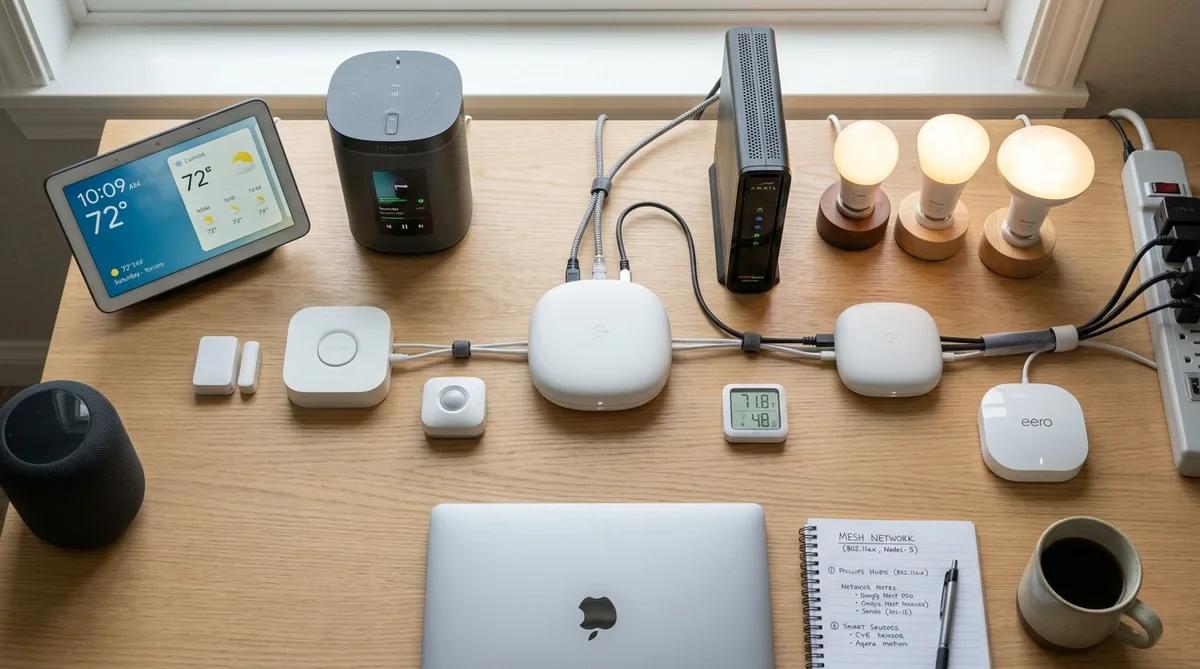
Matter vs. Alexa vs. Google Home vs. Apple Home: What Should You Buy for a Smart Home in 2026?
In 2026, the best smart-home strategy is less about choosing one brand and more about choosing a reliable ecosystem built around Matter. Alexa remains strong for device variety and affordability, Google Home is compelling for Android and AI users, while Apple Home stands out for privacy and Apple-device integration. Matter makes cross-platform ownership increasingly practical, but compatibility still requires careful checking.
The Smart-Home Decision Has Changed in 2026For years, buying a smart-home system meant choosing a side: Amazon Alexa, Google Home, or Apple Home. That decision still matters, but it is no longer as absolute as it once was.
The reason is Matter.
Matter is an industry standard designed to let compatible smart-home devices communicate across ecosystems. A Matter-certified light bulb, for example, may be capable of working with Alexa, Google Home, and Apple Home rather than being permanently tied to one company's platform. Matter also supports a Multi-Admin feature that allows the same compatible device to be shared across multiple smart-home platforms.
That does not mean the smart home has suddenly become completely universal. A Matter device can still have different capabilities depending on the platform controlling it. Cameras, advanced sensors, energy features, automations, voice controls, and subscription services can vary considerably.
That distinction is important for American households spending hundreds or thousands of dollars on connected lighting, thermostats, locks, cameras, appliances, speakers, and security equipment.
The U.S. smart-home market has also moved beyond early adopters. Parks Associates estimates that 54 million U.S. internet households now own at least one smart-home device, while 38% of buyers identify as Early Majority consumers.
So the question in 2026 isn't simply, Which smart speaker is best?
It is: Which ecosystem gives your household the best combination of compatibility, reliability, privacy, automation, device selection, and long-term flexibility?
For most buyers, the answer will be different.
First, Understand the Difference Between Matter and the Four PlatformsOne of the most common smart-home buying mistakes is treating Matter and Alexa, Google Home, or Apple Home as competing products.
They aren't.
Matter is a standard. Alexa, Google Home, and Apple Home are ecosystems and control platforms.
A useful analogy is Wi-Fi. Wi-Fi allows compatible devices to communicate over a common networking technology. Your iPhone, laptop, television, and printer don't have to be made by the same company to use Wi-Fi.
Matter is attempting something similar for smart-home devices.
Thread is another important piece of the puzzle. Matter can operate over Wi-Fi and Ethernet, while low-power devices can use Thread. Thread creates a mesh network, and a Thread Border Router connects that Thread network with the rest of your home network.
This creates a three-layer decision:
- Matter: compatibility standard
- Thread/Wi-Fi: connectivity technologies
- Alexa/Google Home/Apple Home: ecosystem and control layer
Matter has continued to evolve. Matter 1.5 added support for cameras, closures, soil sensors, and additional energy-management capabilities, while Matter 1.6 introduced improvements to setup, device management, and context-aware control.
That progress makes Matter increasingly relevant, but consumers should still check the exact features supported by a product before purchasing it.
What Happens When Your AI Agent Gets Access to Your Email, Files and Apps? The New Security Problem Businesses Need to Understand
ChatGPT vs. Claude for Work: Which AI Is Actually Better for U.S. Businesses in 2026?
How Much Are U.S. Companies Really Spending on AI in 2026? The Numbers Behind the AI Spending Boom
Can AI Agents Actually Replace Business Software in 2026? What the “SaaSpocalypse” Debate Gets Right—and Wrong
Yes—but with an important qualification.
Buy Matter-compatible products when the price and features make sense, but don't assume the Matter logo guarantees identical functionality everywhere.
Matter is particularly useful when you want to avoid locking your entire home into one manufacturer.
Imagine a couple in Denver buys a Matter-compatible smart lock, lights, thermostat, and motion sensors. One spouse uses an iPhone and prefers Apple Home. The other uses Android and prefers Google Home.
With compatible hardware and the appropriate hubs, Matter's Multi-Admin functionality can allow both platforms to control the same devices. Google specifically documents simultaneous control through Google Home, Apple Home, Amazon Alexa, and other Matter-certified apps.
That is a major improvement over the older model where every household member had to use the same ecosystem.
But Matter doesn't eliminate every compatibility problem.
A product may technically support Matter while offering more advanced functionality through its manufacturer's own application. A security camera, for example, may support Matter-related functionality while still requiring another service for recording, AI detection, cloud storage, or advanced video features.
This is why a better shopping rule is: Matter is a strong compatibility signal, not a complete specification sheet.
💡 Discover More from IOT & Blockchain

AI & Automation
AI Agents vs. AI Assistants: What’s the Difference—and Which One Should Your Business Use in 2026?
AI & Automation
The Future of Generative AI in Creative Industries
AI & Automation
Machine Learning in Healthcare: Transforming Diagnosis and Treatment

AI & Automation
How Artificial Intelligence Is Redefining Workplace Productivity
Amazon Alexa remains one of the safest choices for Americans who want a broad smart-home ecosystem without committing exclusively to expensive premium hardware.
Amazon has invested heavily in Matter and Thread. Amazon says Matter support has reached more than 100 million Echo devices through software updates, while a range of Echo and eero products can function as Thread Border Routers.
Alexa also supports a wide selection of Matter categories, including lighting, plugs, sensors, locks, thermostats, fans, air purifiers, appliances, and robotic vacuums.
For a typical American household, this creates a practical advantage.
Suppose you want smart bulbs in the living room, plugs in the bedrooms, a smart thermostat, a door lock, a garage controller, and several Echo speakers. Alexa provides a relatively straightforward path to managing those devices together.
It is also attractive for households that shop frequently through Amazon and already own Echo hardware.
### Where Alexa makes the most sense
- Want a large selection of smart-home devices.
- Already own several Echo products.
- Prefer affordable speakers and displays.
- Want broad support for Matter and Thread.
- Don't want your smart-home purchases tied exclusively to Apple hardware.
- Want a mixture of inexpensive and premium connected devices.
Amazon's ecosystem is also increasingly focused on AI-powered smart-home interactions. Amazon's 2026 developer updates show continued development around Alexa+ and AI-enabled smart-home capabilities.
However, there is a downside.
Alexa's strength can also become its weakness. The ecosystem is enormous, and that can mean more brands, more skills, more account connections, and more settings to understand.
For someone who wants a simple, tightly controlled home, Apple Home can feel more coherent.
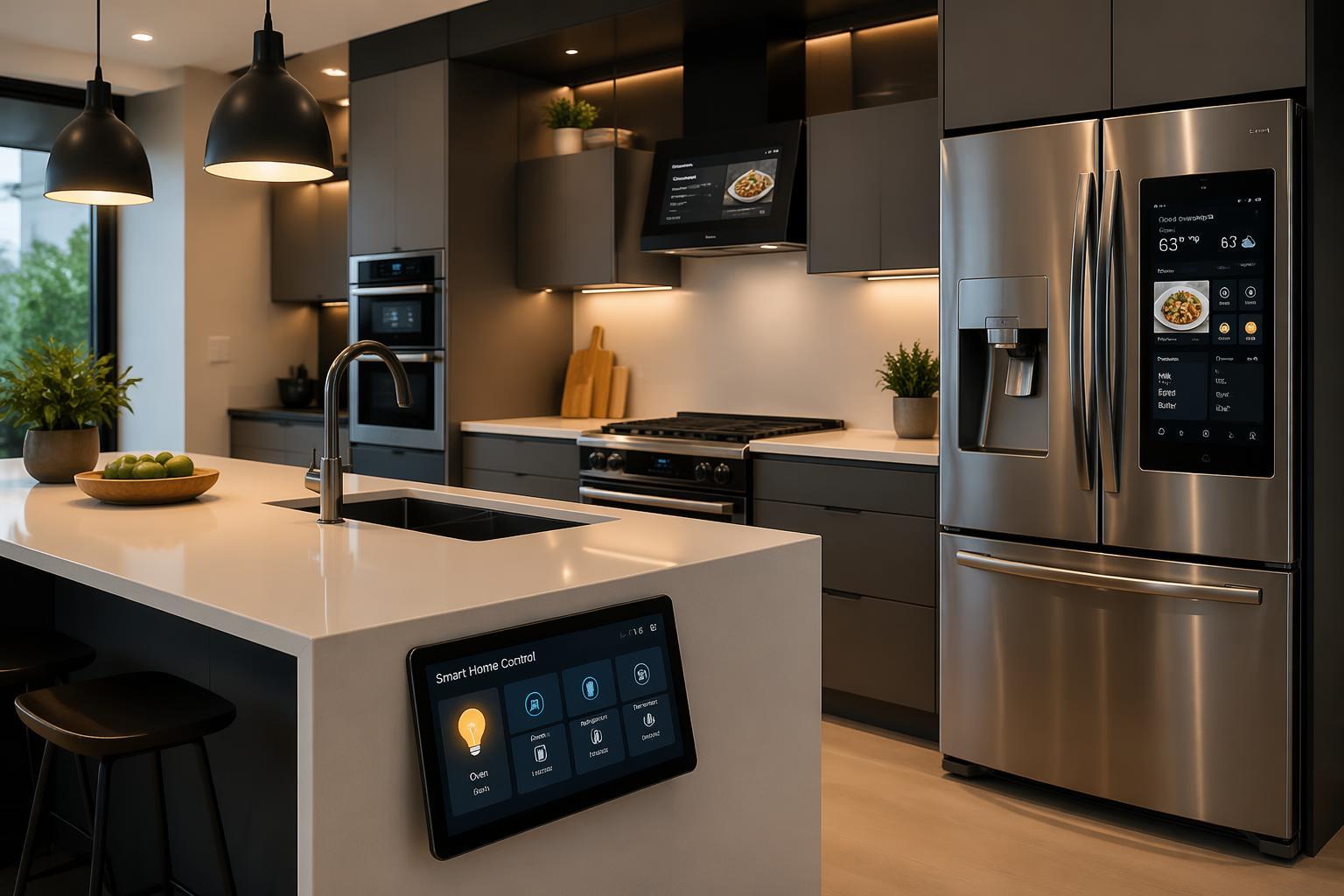 Google Home: Best for Android, Google Services, and Intelligent Automation
Google Home is arguably the most natural choice for households already invested in Android, Google Assistant/Gemini-related services, Google TV, Nest products, and Google's broader ecosystem.
Google has significantly modernized the Google Home experience. Its current platform includes improved device controls, automations, camera experiences, and deeper support for third-party Matter products.
Google's current Matter-compatible hub lineup includes devices such as the second-generation Nest Hub, Nest Hub Max, Nest Wifi Pro, Google TV Streamer, and the 2026 Google Home Speaker. Several of these devices support both Wi-Fi and Thread.
That makes Google Home particularly attractive for someone building around Google's entertainment and connected-home products.
Consider a Phoenix household with Android phones, a Google TV Streamer, Nest speakers, a Nest thermostat, and Matter-compatible lighting.
In that scenario, Google Home becomes more than a voice assistant. It is the central organizational layer for the home.
Google also has a meaningful advantage in automation and contextual information. Its ecosystem is naturally connected to services such as Google Calendar, Maps, YouTube, Search, and Android.
The downside is that Google Home can become less attractive if the household is heavily invested in Apple devices.
There is another consideration: Google's smart-home strategy is increasingly connected with AI. That can be useful, but buyers should distinguish genuinely useful automation from AI features that sound impressive but don't solve a recurring household problem.
The best smart-home automation is usually boring.
Turning the porch light on at sunset is useful.
Turning off every light when the last person leaves is useful.
Automatically adjusting a thermostat based on occupancy can be useful.
An AI feature that generates a clever description of your living room is much less important.
Apple Home: Best for Apple Households and Privacy-Conscious BuyersApple Home makes the most sense when the household already lives inside the Apple ecosystem.
If everyone uses an iPhone, the family has Apple TVs, Macs, Apple Watches, and perhaps HomePods, Apple Home becomes particularly convenient.
Apple's approach also emphasizes privacy and local control.
Apple supports Matter accessories in the Home app, and users can add previously paired Matter accessories from other Matter-compatible apps. Apple says Matter pairing information is stored using end-to-end encrypted iCloud Keychain technology.
Apple's current support includes Matter devices such as lights, locks, switches, thermostats, blinds, shades, sensors, sockets, and air conditioners.
Thread is also important to Apple Home. Thread-enabled home hubs include products such as Apple TV 4K, HomePod mini, and HomePod (2nd generation).
For an iPhone-heavy household, the experience can be extremely intuitive.
You arrive home. Your phone knows you're home. Your Home app organizes the house by rooms. Siri can control compatible devices. Automations can connect lighting, locks, sensors, and other accessories.
The major limitation is ecosystem breadth.
Apple Home has historically been more selective about supported devices and features than Alexa. Matter has narrowed some of that gap, but buyers should still check compatibility carefully.
Apple is also not necessarily the best choice if your household includes many Android users.
If half the family uses Android and the other half uses iPhone, Google Home or Alexa may provide a more practical shared experience.
Alexa vs. Google Home vs. Apple Home: Which Is Easiest?For basic smart-home control, all three can be relatively easy.
The bigger difference appears after you own 10, 20, or 30 devices.
A home with three smart bulbs is simple.
A home with 25 devices can become a small technology system.
This is where setup quality, networking, naming conventions, room organization, automations, firmware updates, and hub selection matter.
Parks Associates found that 52% of DIY smart-home users reported setup or connectivity problems in its research.
That statistic is worth remembering before spending heavily on smart-home equipment.
The problem isn't always the device.
It can be:
- A weak Wi-Fi signal.
- Poor router configuration.
- A Thread network issue.
- An outdated device firmware version.
- A Matter commissioning problem.
- Multiple hubs competing for control.
- Confusing device names.
- A manufacturer's cloud service experiencing an outage.
In other words, the network is part of the smart home.
What About Privacy?Privacy should be part of the buying decision, especially when your home contains microphones, cameras, door locks, presence sensors, and occupancy information.
Apple has traditionally emphasized privacy as a core design principle, which makes Apple Home particularly attractive to privacy-conscious buyers.
Google and Amazon also provide privacy controls, but their broader business models are different, and households should understand what data is collected, where processing occurs, and which features require cloud services or subscriptions.
This does not mean one platform is automatically safe and another is unsafe.
Instead, examine each product individually.
A Matter-compatible light switch and a cloud-connected security camera have very different privacy implications.
The camera deserves much more scrutiny.
For cameras and security devices, investigate:
- Whether video processing happens locally or in the cloud.
- Whether recordings require a subscription.
- How long recordings are retained.
- Whether two-factor authentication is available.
- Whether local storage is supported.
- How accounts can be removed or transferred.
- How firmware updates are handled.
Matter can improve interoperability, but it does not eliminate the business model of the manufacturer behind the device.
 Does Matter Mean You Can Mix Alexa, Google Home, and Apple Home?
Increasingly, yes.
This is one of the most important changes for 2026.
Matter Multi-Admin allows compatible devices to be shared across different Matter-certified platforms. Google explicitly documents the ability to share Matter devices between Google Home, Apple Home, Amazon Alexa, and other supported platforms.
Imagine a family where one person uses an iPhone and another uses Android.
Instead of choosing a single ecosystem for everyone, you can potentially build around Matter and allow both users to control compatible devices through their preferred platforms.
There are still limitations.
The device must support the necessary Matter functionality. Each ecosystem may require a compatible hub. Advanced manufacturer-specific features may not transfer. And some device categories remain less mature than basic lights, plugs, switches, and sensors.
That is why a hybrid strategy is becoming more attractive.
The Best Smart-Home Strategy for Most Americans in 2026For many households, I would not recommend building a home around one brand exclusively.
Instead, use a platform-first, Matter-aware strategy.
Start with the ecosystem that best fits your existing technology.
Then prioritize Matter-compatible products for major purchases where practical.
For example:
- iPhone-heavy household: Apple Home + Matter + Thread
- Android/Google household: Google Home + Matter + Thread
- Mixed household: Alexa or Google Home + Matter + Thread
- Amazon-heavy household: Alexa + Matter + compatible Echo/eero Thread infrastructure
- Advanced enthusiast: Matter + one primary ecosystem, potentially supplemented by Home Assistant
This approach gives you a primary control system without unnecessarily locking every purchase to that ecosystem.
What Should You Buy First?Do not begin with 20 smart devices.
Start with devices that solve obvious problems.
A sensible U.S. starter home might include:
1. Smart switches rather than dozens of smart bulbs.
2. A smart thermostat if your HVAC system supports one.
3. A few smart plugs.
4. Door or motion sensors.
5. One smart lock if security requirements are appropriate.
6. One central smart speaker or display.
7. A Thread Border Router if you plan to use Thread devices.
8. Matter-compatible products for future expansion.
Smart switches are particularly useful because everyone can still operate them manually.
That matters when guests visit, children are home, Wi-Fi goes down, or someone simply doesn't want to use a voice command.
A smart home should not become an endless hardware replacement project.
Should You Choose Wi-Fi, Thread, or Matter?You don't necessarily have to choose one.
A good modern smart home can use all three.
Matter determines how compatible devices can communicate with ecosystems.
Wi-Fi is excellent for higher-bandwidth products and devices that have reliable access to power.
Thread is particularly useful for low-power sensors, locks, buttons, and other devices that benefit from a low-power mesh network.
Matter 1.4.2 also introduced stronger infrastructure requirements, including Thread Border Router requirements designed to support larger networks.
For most households, the best strategy is simply to buy the appropriate technology for each device rather than forcing everything onto Wi-Fi.
Is It Better to Buy a Smart Speaker or a Smart Display?That depends on the room.
A smart speaker is usually enough for bedrooms, offices, hallways, and smaller rooms.
A display is more useful in kitchens and common areas where you want to see timers, cameras, recipes, weather, calendars, or device controls.
For example, a kitchen display can be useful when you're cooking and want to see a timer without touching your phone.
A bedroom speaker can be simpler because you mainly want alarms, music, lights, and basic automation.
The mistake is buying a large number of displays simply because they are available.
Smart-home hardware should follow household behavior rather than the other way around.
What If You Already Own Smart Devices?Don't replace everything.
This is another area where Matter changes the economics of upgrading.
Matter bridges can allow some existing ecosystems and devices to participate in newer smart-home environments without requiring every piece of hardware to be replaced.
If your current smart bulbs work reliably, there may be little reason to throw them away simply because newer products carry a Matter badge.
Replace devices when:
- They no longer receive security updates.
- They are unreliable.
- Their manufacturer is abandoning the platform.
- They require an expensive service you no longer want.
- A newer Matter device provides a meaningful benefit.
- You are remodeling and installing switches or controls permanently.
A smart home should not become an endless hardware replacement project.
The Real Cost of a Smart Home in 2026The purchase price of the hardware is only one part of the cost.
Subscriptions matter.
Parks Associates reports that 53% of smart-home device owners do not pay subscription fees, but among those who do, security and video services are significant categories. The research also found that 16% of smart-home device owners reported paying for a premium AI voice-assistant service.
This means consumers should calculate the five-year cost, not just the checkout price.
A $100 camera that requires a $10 monthly subscription costs much more over several years than its initial price suggests.
Meanwhile, a $30 Matter sensor with no subscription may be inexpensive to operate for years.
The best purchase isn't always the cheapest device.
It is the device with the best combination of reliability, functionality, support, and ongoing cost.
So, What Should You Buy?If you want the shortest possible recommendation:
Buy Matter-compatible devices, then choose your primary ecosystem based on the technology your household already uses.
Choose Alexa if you want broad device compatibility, affordable hardware, and a large ecosystem.
Choose Google Home if your household revolves around Android, Google services, Nest products, and Google's smart-home automation.
Choose Apple Home if your household is heavily invested in iPhone, Apple TV, HomePod, and Apple's privacy-focused ecosystem.
Choose Matter as your compatibility strategy if you want to preserve flexibility over the next several years.
And if you are building a highly sophisticated system, consider using a more advanced automation platform as the underlying control layer while keeping Alexa, Google Home, or Apple Home as convenient interfaces.
The most important smart-home purchase you make may not be a speaker, display, thermostat, or light.
It may be the decision not to lock yourself unnecessarily into one ecosystem.
Matter is not perfect. Setup problems still happen. Some device categories remain uneven. Manufacturer apps and subscriptions still matter. Platform-specific features continue to create differences between Alexa, Google Home, and Apple Home.
But the direction of the industry is clear: interoperability is becoming more important.
For American consumers, the smartest approach in 2026 is therefore not to chase the newest AI feature or buy the largest collection of connected gadgets.
It is to build a home that remains understandable, repairable, compatible, and useful five years from now.
For most Americans, the sensible formula is straightforward: choose one primary ecosystem, favor Matter when practical, use Thread where it makes sense, and avoid unnecessary subscriptions or hardware replacements.
That approach produces something more valuable than a futuristic-looking house.
It produces a smart home that is easier to live with.
Stay in the Loop



You May Also Like
 AI & Automation 4 min read| 21 Jul 2026
Machine Learning Algorithms: An Overview of Popular Techniques and Their Applications
Machine learning algorithms play a pivotal role in today's data-driven world, enabling organizations to analyze vast amounts of data, uncover valuable insights, and make informed predictions. This article provides an overview of several key machine learning techniques and their diverse applications across various domains.
 IOT & Blockchain 5 min read| 12 Aug 2026
The Energy Paradox: Powering the Blockchain Revolution Sustainably
Blockchain technology faces challenges in energy consumption, but innovative solutions aim to make blockchain operations more sustainable.
 Cloud & SaaS 12 min read| 13 Sep 2026
Cloud vs. On-Premises AI: When Does Buying Your Own AI Hardware Actually Make Financial Sense?
Buying AI hardware can beat cloud costs when GPU workloads are large, predictable, heavily utilized, and expected to remain stable for several years. For most growing businesses, however, cloud GPUs remain financially safer because they avoid upfront capital costs, hardware obsolescence, facilities expenses, staffing overhead, and idle capacity. The best choice often combines cloud flexibility with selective on-premises capacity carefully.
 AI & Automation 7 min read| 06 Sep 2026
The Challenges of Bias in AI: Can Machine Learning Ever Be Truly Fair?
The issue of bias in Artificial Intelligence (AI) and machine learning is a critical concern that affects the fairness and reliability of these technologies. As AI systems become increasingly integrated into various aspects of our lives, from hiring practices to law enforcement, it is essential to address the challenges of bias to ensure that machine learning models operate equitably and without discrimination.