
AI Scams Are Getting Harder to Spot: 10 Signs a Text, Call or Email Is Fake in 2026
AI-powered scams are making fake texts, calls, emails, voices and identities increasingly convincing in 2026. The safest response is not to become an expert at spotting deepfakes, but to slow down, verify independently and avoid transferring money or sharing sensitive information under pressure. Ten warning signs—including urgency, unusual payment requests, spoofed identities and suspicious links—can help Americans recognize fraud.
Why AI Scams Are Different in 2026Scams have always depended on deception, but artificial intelligence is changing the quality, speed and personalization of that deception. A fraudulent email no longer needs obvious spelling mistakes. A scammer can produce polished business language, imitate a familiar tone of voice, create a convincing profile photo, translate a message into natural English, or generate dozens of customized messages quickly.
That matters because many traditional scam-detection habits were based on obvious imperfections. Americans were taught to look for bad grammar, strange formatting, unfamiliar phone numbers and poorly designed websites. Those clues can still be useful, but they are no longer reliable by themselves.
The Federal Bureau of Investigation's 2025 Internet Crime Report documented more than 22,000 complaints involving AI-related fraud, with reported losses exceeding $893 million. The FBI says criminals are using synthetic content, fake profiles, personalized conversations, voice cloning and manipulated video to support different types of fraud.
The broader impersonation problem is even larger. The Federal Trade Commission says consumers reported $3.5 billion in losses to imposter scams during 2025, making impersonation the most commonly reported fraud category for the ninth consecutive year. Those scams arrived through texts, calls, email, social media, websites and other channels.
In other words, the central question in 2026 is not simply, "Does this message look fake?"
It is: "What happens if I assume this is real without independently verifying it?"
That change in mindset is one of the most important defenses consumers have.
What Does an AI Scam Look Like?An AI scam can look almost exactly like an ordinary scam. The difference is that artificial intelligence may make the scam more convincing, personalized or difficult to distinguish from legitimate communication.
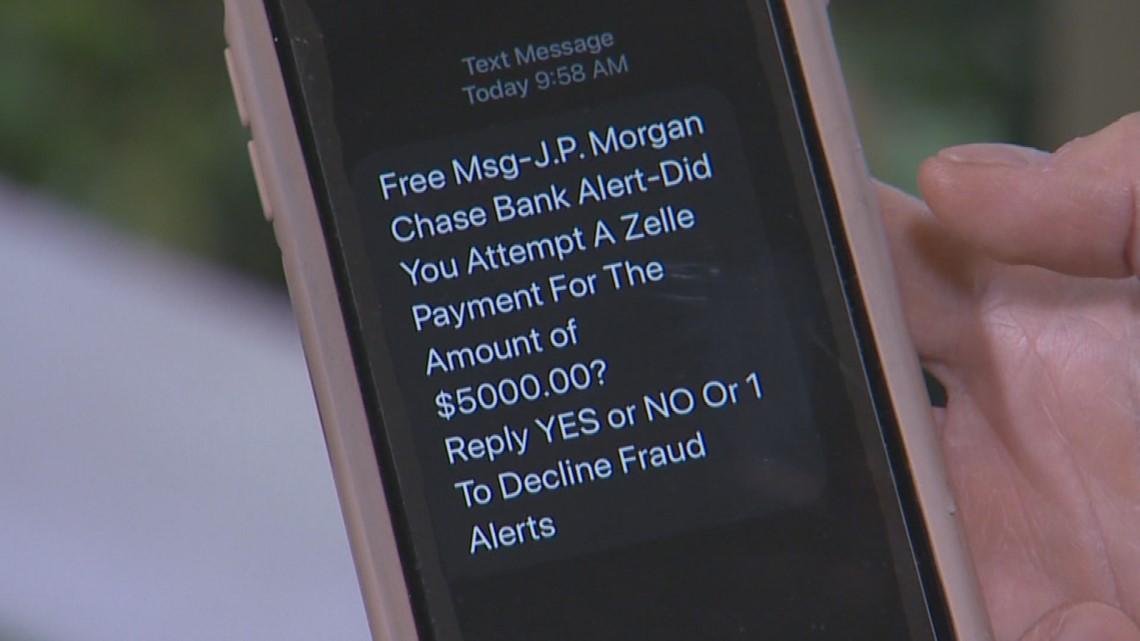
Consider a common bank-impersonation scenario. You receive a text saying a suspicious purchase was detected. The message uses your bank's name and a professional-looking link. You call the number provided because you want to resolve the problem quickly. A person answers, knows the last four digits of your account, sounds professional and tells you that someone is attempting to steal your money.
The "bank representative" then instructs you to move your money into a supposedly protected account.
Every part of the conversation may feel plausible. Yet the safe response is to stop and contact the bank through its official app, website or the number printed on your card.
The FTC specifically warns that scammers use fake fraud alerts to convince consumers to move money to protect it. In reality, those "safe accounts" are controlled by the criminals.
AI does not necessarily create an entirely new scam. Often, it makes an old scam more persuasive.
That is why understanding the underlying psychology is just as important as recognizing the technology.
What Happens When Your AI Agent Gets Access to Your Email, Files and Apps? The New Security Problem Businesses Need to Understand
ChatGPT vs. Claude for Work: Which AI Is Actually Better for U.S. Businesses in 2026?
How Much Are U.S. Companies Really Spending on AI in 2026? The Numbers Behind the AI Spending Boom
Can AI Agents Actually Replace Business Software in 2026? What the “SaaSpocalypse” Debate Gets Right—and Wrong
💡 Discover More from Cybersecurity

AI & Automation
AI Agents vs. AI Assistants: What’s the Difference—and Which One Should Your Business Use in 2026?

AI & Automation
The Future of Generative AI in Creative Industries

AI & Automation
Machine Learning in Healthcare: Transforming Diagnosis and Treatment

AI & Automation
How Artificial Intelligence Is Redefining Workplace Productivity
Urgency is one of the strongest warning signs.
A message may tell you that your bank account will be closed in 30 minutes, your package will be returned today, your tax account is under investigation, your Social Security benefits are at risk, or a family member needs emergency money immediately.
The goal is to prevent you from thinking.
A legitimate organization can certainly have deadlines. But an unexpected communication demanding immediate action deserves independent verification before you click, call or pay.
A practical example is the fake toll text. You receive a message claiming you have an unpaid toll and that failure to pay immediately will result in penalties or vehicle-registration problems. The FTC says government-impersonation reports increased substantially in 2025, with fraudulent toll messages spoofing recognizable toll programs such as E-ZPass, SunPass, FasTrak and TxTag.
Instead of clicking the link, open your browser yourself and locate the official toll agency's website.
The rule: urgency should trigger verification, not faster compliance.
2. Someone You Know Suddenly Needs MoneyAI voice cloning has made the classic family-emergency scam substantially more convincing.
Imagine receiving a call from your adult child. The voice sounds right. They say they were arrested after a car accident and need money for bail. They tell you not to call anyone because they are embarrassed.
Or perhaps the caller sounds like your grandchild and says they lost their phone.
The problem is that a familiar voice is no longer sufficient proof of identity.
The FBI has specifically warned that criminals use AI-generated voices to impersonate known contacts and senior officials. In a 2025 warning, the agency noted that scammers may use publicly available photographs, slightly altered contact information and AI-generated voices to establish credibility.
If a loved one suddenly requests money, hang up and contact that person through a number you already have saved. Don't simply redial the incoming number or continue the conversation through the channel the caller provided.
Families can also establish a private verification phrase or question in advance.
3. The Caller ID Looks PerfectCaller ID is helpful, but it is not proof of identity.
Scammers can spoof caller ID so the incoming call appears to originate from a bank, government agency, local police department, employer or even a familiar contact.
The FTC explicitly advises consumers not to trust caller ID because the displayed name and number can be falsified.
This creates a dangerous psychological shortcut: people see a recognizable institution on their screen and lower their defenses before the conversation even begins.
Suppose your phone displays your bank's name. The caller asks you to verify a one-time code. That request should immediately raise concern. The safest option is to end the call and contact the bank independently.
Caller ID answers "what number is displayed?" It does not answer "who is actually calling?"
 4. The Email Sounds Too Professional to Be Suspicious
For years, poor grammar was one of the easiest phishing clues.
AI has weakened that signal.
A scam email can now be grammatically clean, professionally formatted and customized to your industry. It may use the vocabulary of your employer, bank, insurance company or professional association.
The FBI has warned that AI tools can produce highly convincing phishing campaigns with proper grammar and spelling, making traditional visual clues less dependable.
Imagine receiving an email apparently from your company's finance director asking you to approve a payment. The writing is polished and the signature looks authentic.
Instead of asking whether the email "sounds professional," ask whether the request is normal.
If your finance director has never previously asked you to authorize a wire transfer by email, the unusual behavior matters more than the quality of the prose.
5. The Link Is Slightly WrongOne of the most reliable technical clues remains the destination of a link.
A scammer may create a website that looks almost identical to the real one but uses a subtly altered domain.
A fraudulent address might use:
- A misspelled company name
- An unexpected domain extension
- Extra words or characters
- A look-alike domain
- A shortened URL hiding the destination
- A subdomain designed to resemble a legitimate organization
The FBI has warned about spoofed websites that imitate legitimate government services and use slightly altered domains to collect personal and financial information.
However, don't rely on visual inspection alone. A sophisticated phishing website may look completely legitimate.
The safest habit is to avoid using the message's link altogether. Open the organization's official app or manually type a known website address.
6. The Person Wants a Secret or BypassA scammer may say:
"Don't tell your spouse."
"Don't contact the bank."
"Don't tell your manager."
"Don't hang up."
"Don't verify this with anyone."
Those instructions are strategically important because independent verification is one of the biggest threats to a scam.
Legitimate organizations generally do not need you to hide ordinary account activity from trusted people or prevent you from contacting them through another channel.
This sign is particularly important in romance scams, investment fraud, family-emergency scams and business impersonation schemes.
The FTC says romance-scam losses increased in 2025, while scammers frequently develop relationships before eventually requesting money or investment funds.
If someone is trying to isolate you from outside advice, pause the conversation.
7. The Payment Method Is Unusual or IrreversiblePayment instructions can reveal a scam even when the story itself sounds believable.
Be especially cautious when someone unexpectedly demands payment through cryptocurrency, wire transfer, gift cards, cash, payment apps or other methods that offer limited protection.
In 2024, consumers reported losing more money through bank transfers or payments than through any other payment method, according to the FTC. Cryptocurrency was another major source of reported losses.
A common scam pattern is to create an urgent reason for an unusual payment method.
A fake government representative might say that credit cards are unavailable. A fake bank employee may claim that you need to move money to a "secure wallet." A fake employer may ask you to purchase equipment with your own money.
The story changes. The underlying objective does not.
Unexpected money movement should always receive independent verification.
8. The Caller Knows Personal Information About YouThis is one of the most deceptive developments in modern scams.
A scammer might know your name, city, employer, relatives, recent purchase or partial account information.
That does not prove authenticity.
Much of this information can come from public records, data breaches, social media, compromised accounts, marketing databases or information you have posted publicly.
AI makes it easier to organize and use that information in a personalized conversation.
For example, a scammer might see that you recently posted about your son's graduation. Later, someone calls claiming to be connected to your son's college and asks for information related to an administrative issue.
The information feels too specific to be random.
But specificity is not authentication.
Treat unexpected knowledge about you as a reason to verify the caller—not as proof that the caller is legitimate.
9. The Conversation Changes ChannelsA particularly useful warning sign is when a stranger wants to move the conversation from one platform to another.
You might receive a social-media message from someone claiming to represent a business. They then ask you to continue the conversation through WhatsApp, Telegram, text message or another private platform.
The FBI has described campaigns in which scammers establish rapport through messaging and then attempt to move targets to another platform using malicious links.
Channel switching isn't automatically fraudulent. Businesses and individuals legitimately use multiple communication platforms.
The concern arises when the change is unexpected and combined with pressure, secrecy, money requests or credential requests.
If a message says, "Let's move this conversation somewhere more private," slow down.
 10. You're Being Asked to Prove Your Identity by Giving Away the Information That Proves It
This is one of the most important warning signs.
A scammer may ask for your:
- Password
- One-time authentication code
- Social Security number
- Full bank-account details
- Debit-card PIN
- Remote-access permission
- Security answers
- Cryptocurrency wallet credentials
The request may sound reasonable because the person claims to be helping you secure your account.
But authentication information should not normally be surrendered to an unexpected caller.
A particularly dangerous example is the one-time code scam. A criminal may already have your username and password, then call pretending to be your bank. They ask you to read back the verification code that has just arrived on your phone.
The code isn't helping them verify you.
It may be helping them log into your account.
How Can You Tell If an AI Voice Is Fake?The uncomfortable answer is that sometimes you cannot reliably tell by listening.
The FBI says AI-generated content has advanced to the point where identifying it can be difficult. The agency recommends paying attention to voice characteristics such as unusual lag, tone, word choice and voice matching, but independent verification remains more dependable than trying to identify a synthetic voice by ear.
That distinction matters.
You should not train yourself to believe that AI voices always sound robotic. Modern voice-cloning systems can sound natural enough to fool people who know the supposed speaker.
Instead, use an authentication procedure.
If your child calls with an emergency:
1. Ask a question only the real person would reasonably know.
2. End the call.
3. Contact them using a trusted number.
4. Contact another family member if necessary.
5. Do not transfer money until the emergency is independently confirmed.
The objective isn't to become a human deepfake detector.
It's to make impersonation ineffective.
Are AI-Generated Scam Emails Easy to Spot?Not necessarily.
The old formula—bad grammar equals scam, perfect grammar equals legitimate—is no longer useful.
AI can help scammers write convincing emails in seconds. It can also adapt wording to a particular recipient, imitate corporate communication styles and produce different versions of the same scam.
That means readers should evaluate context, request and verification, not just grammar.
Ask:
- Was I expecting this?
- Is this a normal request from this organization?
- Does the sender's address actually belong to the organization?
- Does the request involve money or sensitive information?
- Is there a deadline designed to pressure me?
- Can I verify it independently?
If the answer to several questions is concerning, stop interacting with the message.
What Should You Do If You Already Responded to an AI Scam?Don't assume that responding means you have lost money. The appropriate response depends on what you disclosed or did.
If you clicked a suspicious link but did not enter information, close the page and consider running your device's security tools. If you entered a password, change it immediately from the legitimate website and change it anywhere else that same password was reused.
If you provided banking information, contact the financial institution using a trusted number. If money was transferred, report the transaction immediately and ask what recovery or recall options are available.
If you gave away a one-time authentication code, treat the account as potentially compromised and contact the relevant service immediately.
If you sent money to a scammer, document everything. Save messages, phone numbers, email headers where available, transaction records, screenshots and wallet addresses.
For scams affecting Americans, the FTC accepts reports through ReportFraud.gov, while internet-crime victims can file with the FBI's Internet Crime Complaint Center.
The important point is speed. Reporting does not guarantee recovery, but delaying action generally does not improve the situation.
Why Text Scams Deserve More AttentionText messages can feel less dangerous than phone calls because they are short and easy to dismiss.
Yet they are extremely effective at initiating conversations.
FTC data show that consumers reported $470 million in losses from scams that started with text messages in 2024, five times the amount reported in 2020. Fake package-delivery messages were among the most common, along with fake job opportunities, fraud alerts, unpaid-toll demands and "wrong number" scams.
The practical lesson is simple: an unexpected text is not automatically harmless because it contains only a few sentences.
A package message saying "delivery failed" may be designed to capture your payment details. A fake bank alert may be designed to get you onto a fraudulent call. A wrong-number message may be the first step in a longer relationship or investment scam.
Treat the first contact as the beginning of a possible fraud chain.
A Better Way to Verify Any Suspicious MessageInstead of trying to prove that something is fake, try to prove that it is real.
This is a subtle but powerful difference.
Suppose you receive an email from your health insurer asking you to update information. Don't click the link and then investigate the resulting website. Open the insurer's official website independently or use its official mobile app.
If someone calls claiming to be from your bank, hang up and call the number printed on your card.
If a family member requests emergency money, contact them through a previously known channel.
If your employer asks you to make an unusual payment, verify the request using an established internal process.
This method works because scammers control the communication channel they initiated. Independent verification moves the conversation onto a channel they don't control.
What Americans Should Know About AI Scams in 2026The biggest misconception is that AI scams are a completely separate category of fraud.
They're not.
AI is increasingly a capability layered onto established fraud techniques: impersonation, phishing, business-email compromise, romance scams, investment fraud, tech-support fraud and family-emergency scams.
The FBI's 2025 data illustrate the scale of the emerging problem, with more than 22,000 AI-related complaints and reported losses approaching $893 million.
At the same time, the FTC's broader impersonation data show that scammers do not need spectacular deepfakes to cause damage. Traditional-looking impersonation scams generated $3.5 billion in reported consumer losses in 2025.
That is why basic fraud-prevention habits remain important even as technology changes.
Don't transfer money because someone sounds convincing.
Don't disclose a security code because someone knows your name.
Don't trust a caller because caller ID looks familiar.
Don't click because an email looks professional.
And don't let urgency replace verification.
AI has changed one important assumption behind everyday communication: sounding like someone is no longer the same as being that person.
That does not mean Americans need to distrust every phone call, email or text. It means high-consequence requests deserve a higher standard of verification.
The most useful habit is also the simplest: take a beat.
If a message makes you scared, excited, rushed or unusually trusting, pause before acting. Those emotions are often exactly what the scammer is trying to create.
When money, passwords, identity information or account access are involved, move outside the communication channel and verify the request independently.
The strongest defense against an increasingly sophisticated AI scam is not perfect technology or the ability to recognize every deepfake. It is refusing to let a stranger control the pace and method of your decision.
Stay in the Loop


You May Also Like
 IOT & Blockchain 6 min read| 04 Sep 2026
Understanding the Legal and Regulatory Landscape of Blockchain Technology
Blockchain technology has rapidly evolved, offering innovative solutions across various sectors such as finance, supply chain, and healthcare. As its adoption grows, understanding the legal and regulatory landscape surrounding blockchain becomes increasingly important. Navigating this complex environment involves addressing legal challenges, regulatory requirements, and compliance issues to ensure that blockchain implementations are both effective and lawful.
 AI & Automation 5 min read| 04 Aug 2026
Machine Learning in Supply Chain Management: Optimization and Efficiency
Machine Learning (ML) is revolutionizing supply chain management by optimizing operations, enhancing efficiency, and improving decision-making processes. This article explores the transformative impact of ML in supply chain management, from demand forecasting and inventory optimization to logistics planning and predictive maintenance.
 AI & Automation 5 min read| 03 Aug 2026
AI in Marketing: Targeted Advertising and Customer Insights
Artificial Intelligence (AI) is revolutionizing marketing strategies by enhancing targeted advertising, improving customer insights, and optimizing campaign performance. This article explores the transformative role of AI in marketing, from personalized recommendations and predictive analytics to automated content generation and customer relationship management (CRM).
 Cybersecurity 4 min read| 26 Jul 2026
Unveiling the Future: Exploring the Latest Breakthroughs in Tech and Science
Welcome to the forefront of innovation, where the latest breakthroughs in technology and science are shaping the future of humanity. From artificial intelligence and biotechnology to space exploration and quantum computing, cutting-edge discoveries and advancements are paving the way for a new era of possibilities. In this article, we'll delve into some of the most exciting developments in tech and science and explore their potential impact on our world.